

Close
Thank you! Your submission has been received!
Oops! Something went wrong while submitting the form.

Get in touch

Our team is ready to answer all of your questions.
This site is protected by reCAPTCHA and the Google Privacy Policy and Terms of Service apply.
Thank you! Your submission has been received!
Oops! Something went wrong while submitting the form.

Context Engineering Services: RAG, Prompt Engineering, and the Build-vs-Hire Decision

Posted on:
September 14, 2026
dot
8
min read
by:
Stephanie
Flores
A team of engineering leaders, including a Filipino systems architect and a Wasian data engineer, collaborate on complex technical diagrams at a terrazzo standing desk in a modern Manila high-rise office. With the Bonifacio Global City skyline and Metrobank Center visible in the background, this photo represents the key talent involved in balancing engineering services costs for local RAG builds.
1st place winner of the Rock the Night Away photography contest at the KDCI Outsourcing Year-End Party 2025
2nd place winner of the Rock the Night Away photography contest at the KDCI Outsourcing Year-End Party 2025
KDCI Outsourcing Rock the Night Away photography contest 3rd place winner at the KDCI Year-End Party 2025
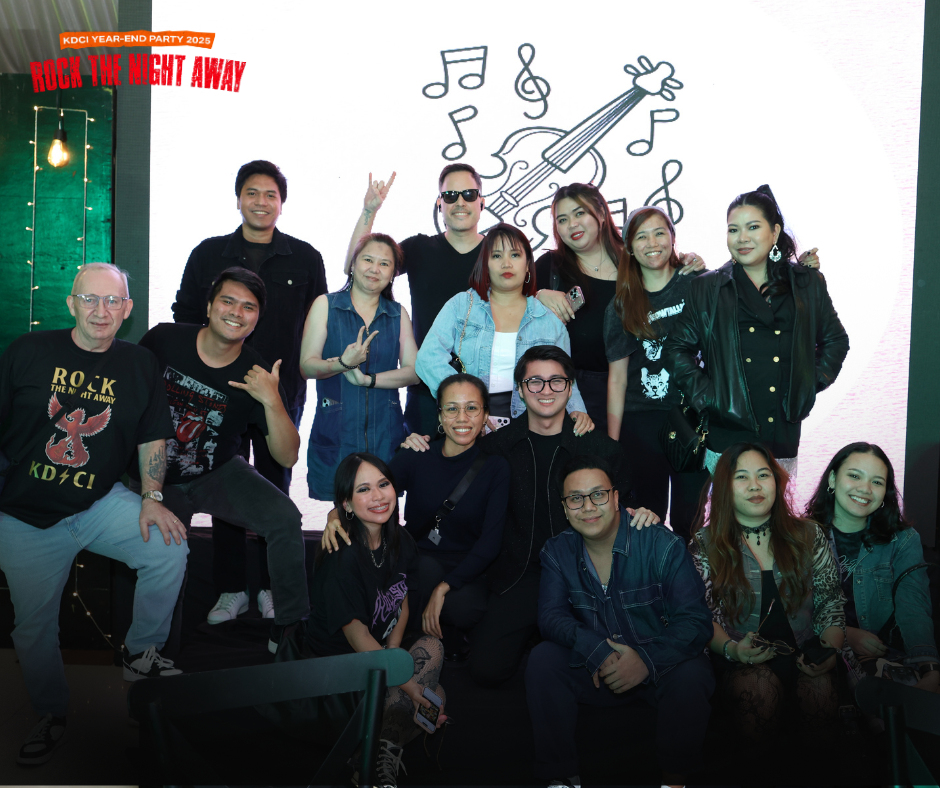
KDCI Outsourcing employees group photo at the KDCI Year-End Party 2025 “Rock the Night Away” company celebration
KDCI Outsourcing employees posing for a group photo at the KDCI Year-End Party 2025 “Rock the Night Away” company celebration
KDCI Outsourcing employees posing with rock hand signs at the KDCI Year-End Party 2025 “Rock the Night Away” company celebration
KDCI Outsourcing employees performing rock music at the KDCI Year-End Party 2025 “Rock the Night Away” company event
KDCI Outsourcing employees performing on stage during the KDCI Year-End Party 2025 “Rock the Night Away” company celebration
KDCI Outsourcing employees cheering and celebrating during the KDCI Year-End Party 2025 “Rock the Night Away” company event
KDCI Outsourcing employees posing together at the KDCI Year-End Party 2025 “Rock the Night Away” company celebration
KDCI Outsourcing employees posing at the KDCI Year-End Party 2025 “Rock the Night Away” corporate celebration
KDCI Outsourcing team members posing with rock hand gestures at the KDCI Year-End Party 2025 “Rock the Night Away” themed celebration
KDCI Outsourcing employees posing at the KDCI Year-End Party 2025 “Rock the Night Away” corporate celebration
KDCI Outsourcing President and CEO raffle winners at the KDCI Year-End Party 2025 “Rock the Night Away” company celebration
KDCI Outsourcing employee raffle winner at the KDCI Year-End Party 2025 “Rock the Night Away” company celebration
A team of engineering leaders, including a Filipino systems architect and a Wasian data engineer, collaborate on complex technical diagrams at a terrazzo standing desk in a modern Manila high-rise office. With the Bonifacio Global City skyline and Metrobank Center visible in the background, this photo represents the key talent involved in balancing engineering services costs for local RAG builds.
Table of Contents
1
What are the benefits of outsourcing to developing countries?
2
What are the challenges of outsourcing to developing countries?
3
Top 5 Most In-demand Developing Countries for Outsourcing
4
What are some successful examples of companies that have outsourced to developing countries?
5
What are the best practices for outsourcing to developing countries?
Context Engineering Services: RAG, Prompt Engineering, and the Build-vs-Hire Decision
KDCI Outsourcing
September 13, 2026
TL;DRContext Engineering Services cover how a growing AI product manages everything a model sees when it responds, including retrieved documents, memory, tool outputs, and instructions. Most of the real hiring demand for this work still moves under older, more searched terms like RAG and prompt engineering, since the discipline's own name is still catching up to buyer vocabulary. Once a system is live, the real decision isn't whether to build it. It's who keeps tuning it after launch.

A customer asks your support bot about an order, and four messages later it's quoting a return policy that was archived last spring. The model didn't get worse. The information feeding it did, and that's the exact gap Context Engineering Services exists to close: what a model sees at the moment it responds.

This article sits under KDCI's AI development services work, part of the broader AI developer hiring guide covering every engineering role a growing AI product eventually needs. Ahead: what the discipline involves, how it differs from RAG and prompt engineering, what it costs, and when it's time to hire for it.

What is Context Engineering?

Context engineering is the practice of managing everything a model sees at the moment it generates a response: retrieved documents, conversation history, tool outputs, and system instructions. The goal is giving the model the right information at the right time, inside a fixed token budget.

Retrieval-augmented generation (RAG) is the most established technique inside context engineering: pulling relevant documents from a database and feeding the best matches to the model alongside a prompt. 

For example, a support bot that answers from product documentation is already running a basic RAG pipeline: retrieving candidate documents, ranking them, and passing the best matches to the model as context.

Context Engineering vs. RAG vs. Prompt Engineering

Prompt engineering shapes the instruction. RAG retrieves the data. Context engineering manages both of those, plus memory, tools, and token budget, as one system.

Context Engineering RAG Prompt Engineering
Focus Everything the model sees: history, tools, instructions, retrieved data Retrieval and injection of external documents Wording and structure of the instruction itself
Goal Right information, at the right time, within budget Accurate, relevant document retrieval Clear, well-structured requests
Covers Memory, token budget, retrieval, assembly, evaluation Search and fetch Prompt phrasing and formatting
Usually hired as One broader GenAI/LLM engineering role Folded into that same role A narrow specialist, sometimes

Most job posts still say RAG or prompt engineer, because that's the vocabulary recruiters and procurement teams search for. A team asking for "context engineering," "RAG development," or a "prompt engineer" is often describing the same underlying hire.

KDCI is building out dedicated coverage for prompt engineering hiring as its own page. Until then, most companies hire one engineer who covers both skills.

What Does Context Engineering Involve?

What stands out about context engineering is how much it bundles into a single hire: five distinct areas, each one substantial enough to be its own specialist role at a large company.

  • Retrieval (RAG) pipelines: Finding and ranking the right chunks at query time. This sits on top of the data engineering staffing work underneath it, in the vector database and indexing layer.
  • Memory systems: What the model retains across sessions, and what it deliberately forgets.
  • Context window and token budget management: What earns a place in a finite window as conversations and source documents grow.
  • Prompt-and-context assembly: Combining retrieved content, history, and instructions into what the model actually receives.
  • Evaluation and guardrails: Catching stale retrieval or contradictory sources before they reach the output.

A small team usually hires one engineer to own all five. Once a product scales into millions of documents or thousands of daily conversations, retrieval and evaluation tend to split off into their own roles, since tuning either one at that volume is already a full-time job.

What Breaks When Context Engineering is Done Wrong

The costliest context engineering failure is a model that gives a confident, wrong answer, because nothing caught the problem earlier in the pipeline. Four failure modes account for most of what goes wrong in practice.

Failure Mode What it Looks Like in Practice
Context loss over long conversations The model forgets something said earlier in the session, usually because the memory or window strategy didn't retain it.
Retrieval returning the wrong chunks Answers cite irrelevant or outdated material, traced back to poor chunking, a stale index, or weak ranking.
Token-cost blowout The same task gets steadily more expensive to run, because context keeps growing with no budget strategy in place.
Hallucination from stale or contradictory context The model gives a confident, wrong answer when multiple retrieved sources disagree and nothing resolves the conflict.

None of these show up as model-quality bugs. They persist even after a team upgrades to a newer, more capable model, because the model was never the actual problem.

What Does Context Engineering Cost?

Cost splits two ways: a one-time engagement to design the system, or an ongoing hire to run it. Context engineers in the United States earn an average annual salary ranging from $120,000 to over $300,000, depending on experience level and company funding. A hire is priced per month rather than per project, which is why it's the stronger option once a system is live and needs constant tuning. A KDCI hire runs roughly a third less than an equivalent local hire, flat monthly.

Build it Yourself or Hire For it?

A short engagement is enough when the problem is bounded: one retrieval pipeline, built once, rarely revisited. A hire earns its cost when context engineering becomes a permanent, tuning-as-you-go layer of the product.

Situation Best Fit
One-time architecture for a stable internal tool Short engagement
Live product answering customer questions from a growing document base Full-time hire
Several integrated systems (chat memory, retrieval, tool use) running together Dedicated hire

Hiring-process specifics, screening, salary bands, interview structure, live on KDCI's hiring generative AI engineers page. If the problem is really about OpenAI's own embeddings and assistants API, OpenAI developers for hire is the narrower fit. If it's mostly chat memory inside a conversational product, that depth lives on the conversational AI developer page.

How KDCI Vets Context Engineering Talent

KDCI's assessment checks for production experience with a retrieval or memory system, the gap between shipping a working prototype and keeping one stable under real load. That's exactly what the failure-modes table above exposes. Candidates are evaluated on how they've handled stale retrieval, budget overruns, and conflicting sources in live systems.

What the Hiring Process Looks Like

KDCI matches pre-vetted context and RAG engineers against your specific stack and system requirements. Every candidate has already cleared the internal skills assessment before you see a profile, so what's left on your side is a short technical conversation and a fit check. Most searches close in 7 to 14 days, at a flat monthly rate, with no equity and no recruiter fee.

Context Engineering Doesn't End at Launch

Every context or RAG system needs someone watching it after it ships: returning retrieval as documents change, catching budget creep before it hits the invoice, resolving the source conflicts a model can't sort out alone. 

KDCI staffs the engineer who keeps it tuned after launch, which is the part most teams underestimate until the first bad answer reaches a customer. If that's the gap on your team, it's worth seeing who's available.

Skip the search. KDCI staff pre-vetted context and RAG engineers, ready in 7 to 14 days, at a flat monthly rate with no recruiter fee.

Frequently Asked Questions (FAQs)

Why does context engineering matter more in multi-agent systems? 

Every additional agent adds another source of context, tool outputs, other agents' messages, shared memory, that has to be filtered and prioritized. A single-agent system has one context stream to manage; a multi-agent system has several, and they can contradict each other.

Is context engineering a one-time setup or an ongoing process? 

It's ongoing. Documents get added, conversations get longer, and usage patterns shift, so retrieval rules, memory limits, and token budgets all need regular returning as the system runs.

Does giving a model more context always improve its answers? 

No. Past a certain point, extra context adds noise, competing signals, and higher token cost without improving accuracy. The skill is picking the right information for the task, regardless of how much total context is technically available.

Does context engineering only apply to large language models? 

It's most visible in LLM products today, but the underlying idea, managing what a system knows at decision time, applies to any AI system that reasons over retrieved or remembered information.

Build Your
Outsourcing Team
Talk to us about outsourcing needs
This site is protected by reCAPTCHA and the Google Privacy Policy and Terms of Service apply.
Thank you! Your submission has been received!
Oops! Something went wrong while submitting the form.
Related Articles
We Provide Amazing Services
Our training and strategic outsourcing services have helped thousands of organizations succeed
Get in touch with us
This site is protected by reCAPTCHA and the Google Privacy Policy and Terms of Service apply.
Thank you! Your submission has been received!
Oops! Something went wrong while submitting the form.
waypoint icon
USA Office
552 E Carson St. Suite 104, Carson, CA 90745, USA
Contact Sales icon
Contact Sales
Contact recruitment icon
Contact Recruitment