Thank you! Your submission has been received!
Oops! Something went wrong while submitting the form.
Thank you! Your submission has been received!
Oops! Something went wrong while submitting the form.


%20(1).webp)
Visitors take 0.05 seconds to form an opinion about your website. So, if your website isn’t presentable and functional, you can expect low customer engagement and decreased trust and credibility.
How do you prevent this? With the help of responsive web design services. These services ensure your website automatically adjusts and adapts its layout to fit the screen size and resolution of any device, from desktops to smartphones. By doing this, you can elevate your brand in 5 ways, discussed below.
A responsive web design refers to a website that automatically adjusts its layout, content, and functionality to display optimally across various devices and screen sizes.
This approach ensures that whether a user is viewing the site on a desktop, tablet, smartphone, or any other mobile device, the website will reformat itself to provide a seamless, user-friendly experience. The goal is to eliminate the need for separate designs for each device type, ensuring accessibility, improving user engagement, and enhancing overall user satisfaction.
With responsive website design services, business owners won't need to set up a responsive website on their own, saving them time and resources. All they need to do is find a company offering creative process outsourcing services who can execute the work for them.
Responsive web design services can significantly elevate your brand in several key ways, ensuring your online presence is not only versatile but also user-friendly across all devices. Here are the top five ways these services can transform your brand.
Responsive web design services play a pivotal role in elevating your brand by significantly enhancing the User Experience (UX). This approach to web design ensures that no matter which device a customer uses to interact with your brand's online presence, their browsing experience remains seamless and efficient.
Since the cornerstone of responsive design lies in its adaptability, it automatically adjusts the layout, content, and functionality of a website to fit the screen size and resolution of the viewing device. This fluidity eliminates common issues such as distorted images, misplaced text, or inconvenient navigation that often frustrate users on non-responsive sites.
By providing a consistently positive experience across all platforms, responsive design not only increases the opportunity for conversions but also builds a positive perception of your brand in the minds of your customers.
With the rise of smartphones, more people are using mobile devices to access the internet than ever before. Responsive web design services cater to this audience by ensuring websites are fully optimized for smaller screens, making online content more accessible, navigable, and enjoyable for users on the go.
By adopting responsive web design services, brands can ensure their websites are primed for the mobile era, making them accessible to the vast and growing number of users who rely on mobile devices for their internet usage.
This strategic move not only increases mobile and website traffic but also positions your brand as modern and user-friendly, further elevating its appeal and competitive edge in the digital marketplace.
Search engines, with Google at the forefront, have increasingly prioritized mobile-friendly websites in their algorithms. This shift reflects the growing dominance of mobile internet usage and underscores the importance of responsive design in a comprehensive SEO strategy.
Responsive web design services ensure that a website provides an optimal viewing experience across a wide range of devices, from desktops to smartphones. This adaptability not only enhances user experience but also aligns with search engines' goal to deliver highly relevant and accessible content to users, regardless of the device they use.
Moreover, responsive design consolidates your site's content under one URL, easing search engine indexing and avoiding duplicate content issues from separate mobile and desktop sites. This simplifies crawling and indexing for search engines, consolidates SEO value, and enhances your site's authority.
In the traditional approach, companies often found themselves maintaining separate websites for desktop and mobile users. This not only doubled the effort required in terms of content creation, updates, and maintenance but also significantly increased the costs associated with web development and upkeep.
With a responsive web design company, you can eliminate the need for multiple versions of your website by introducing a single, dynamic site that fluidly adjusts its layout, content, and functionality to accommodate the screen size and resolution of any device used to access it.
By reducing both initial development and ongoing maintenance costs, while also improving the efficiency of content management and search engine optimization strategies, responsive design services offer a cost-effective solution that enhances brand consistency and accessibility across all platforms.
Future scalability is an integral aspect of sustaining a brand's online presence, and responsive web design services are pivotal in achieving this goal. It equips your website with the flexibility to adapt seamlessly to these changes, ensuring that your brand not only keeps pace with digital innovation but also leads in providing a superior user experience.
The foundation of responsive design services lies in its fluid images, flexible layouts, and media queries. This adaptability means that whether a visitor accesses your site from a current smartphone model, a future tablet yet to be released, or any other device, your website will render perfectly, offering an optimal viewing experience.
This level of preparedness for future technology developments offers several significant benefits to your brand, such as a more consistent user experience, enhanced competitive edge, and increased reach and engagement.
The cost of responsive web designing services in the USA can vary widely based on several factors, including the complexity of the design, the number of pages, any special features or integrations, and the expertise of the design team or agency. Here’s a general breakdown to give you an idea.
For small businesses or individuals comfortable with taking a more hands-on approach in creating responsive websites, using website builders like Squarespace, Wix, or WordPress with responsive themes can cost anywhere from $0 (with limited features and ads) to around $50 per month for premium plans.
You can engage in remote staffing by hiring a freelance web designer can offer more customization than DIY builders. Prices can range significantly based on experience and project scope, from as low as $1,000 to $5,000 for a basic to moderately complex responsive website.
For businesses looking for a comprehensive, custom-designed website, professional graphic design firms provide extensive responsive web development services from design to development and testing. Prices for agency work can start around $5,000 and can easily exceed $25,000 for large, complex projects.
Large businesses or those requiring advanced functionality, such as e-commerce capabilities, integrated databases, or custom applications, can expect costs for responsive website development services to start at $25,000 and can go well into the $100,000 range or more.
You can always consider working with responsive web design companies from the Philippines to cut down on operational costs. Doing this can help you achieve up to 70% cost savings without sacrificing quality.
It’s difficult finding seasoned experts who can create a responsive web design for you. With thousands of web designers online, how do you know who’s the right person for the job?
That’s what KDCI does for you. Our responsive web design services includes building you a team of Filipino web designers who will meet your requirements and design your website for the best user experience. We’ll do all the heavy lifting from sourcing and hiring to vetting and training your web designers, making sure you get the best website you can possibly imagine.
Ready to build your web design team in the Philippines? Click the button below to learn more.


At KDCI, Valentine's Day is more than just a celebration of love; it's a showcase of creativity, teamwork, and the vibrant spirit of our company culture.
This year, we take our annual Valentine's competition to new heights with the theme "Bagay Pa Rin Tayo," a testament to the enduring partnerships and friendships within our teams. Let's dive into how our company celebrated this special day, blending professional zeal with a touch of fun.
In the spirit of Valentine's Day, our team at KDCI holds a unique Photo Contest that sees different departments pairing up in various "love teams" – be it friends, couples, or squads. More than just winning, the competition is about sharing the Valentine's Day spirit across the KDCI team, encouraging fun and celebration of love in all its forms.
KDCI prides itself on its annual Valentine's Day competition, each year featuring a different theme and mechanics to keep the excitement alive.
The theme for 2024, "Bagay Pa Rin Tayo," was carefully chosen by our HR team early in the month, in collaboration with the creative team, to celebrate connections that stand the test of time and change.
The HR team at KDCI excels in orchestrating the Valentine's Day 2024 event, "Bagay Pa Rin Tayo," blending creativity and inclusivity to reflect our vibrant company culture. Collaborating with the creative team, they crafted engaging visuals and thoughtfully designed the competition to inspire creativity and teamwork.
The contest is open to all departments, fostering a sense of unity and friendly competition across the company. It is a delightful opportunity for teams to collaborate creatively and showcase their dynamics.
Participants rally their departments, selecting at least one pair to represent their team. The challenge is to embody a "love team" that resonates with their unique dynamics, captured through a photo.
These photos are then shared on KDCI’s official Facebook page, with the KDCI community voting for their favorites by liking and sharing the posts. The competition not only celebrates creativity but also engagement, as interactions are limited to followers of the KDCI Facebook Page, reinforcing a sense of community.
The fervor and creativity displayed in this year's Valentine's Day photo contest at KDCI are unparalleled, with entries that go above and beyond in showcasing the spirit of love, partnership, and imaginative flair.
Amidst a competitive field, three teams distinguish themselves, not just for their creativity but for their ability to capture the essence of what makes a truly memorable "loveteam."

Leading the contest is the Back-Office Team, represented by Gio Adriano and Jezca Felarca, with a photo that perfectly encapsulates the Yin-Yang theme. Their portrayal goes beyond the visual representation of balance; it is a profound narrative of how opposites attract and complement each other, creating a whole that is greater than the sum of its parts.

Ken David and Guen Omnes of the Admin Team take us on a nostalgic journey back to the '90s with their Marvin & Jolina-themed photo, titled "Labs Kita, Okey Ka Lang?" This entry captivates hearts by reviving the iconic love team that defined a generation, blending the essence of classic Filipino love stories with the contemporary spirit of KDCI.

Bien Magdaraog and Kneve Ramos of the Creative & Dev Team bring action to the forefront with their Fast & the Furious-themed photo, embodying the dynamic duo of Dom & Brian. This entry stands out for its adrenaline-pumping portrayal, drawing parallels between the high-octane world of street racing and the fast-paced, innovative environment of KDCI.
In a gesture that perfectly captures the Valentine's day spirit, our HR team took on the role of Cupid, distributing cupcakes to each on-site team member. These cupcakes, adorned with pink frosting and colorful toppings, were more than just treats, but also symbols of the love and appreciation we share within our corporate family.
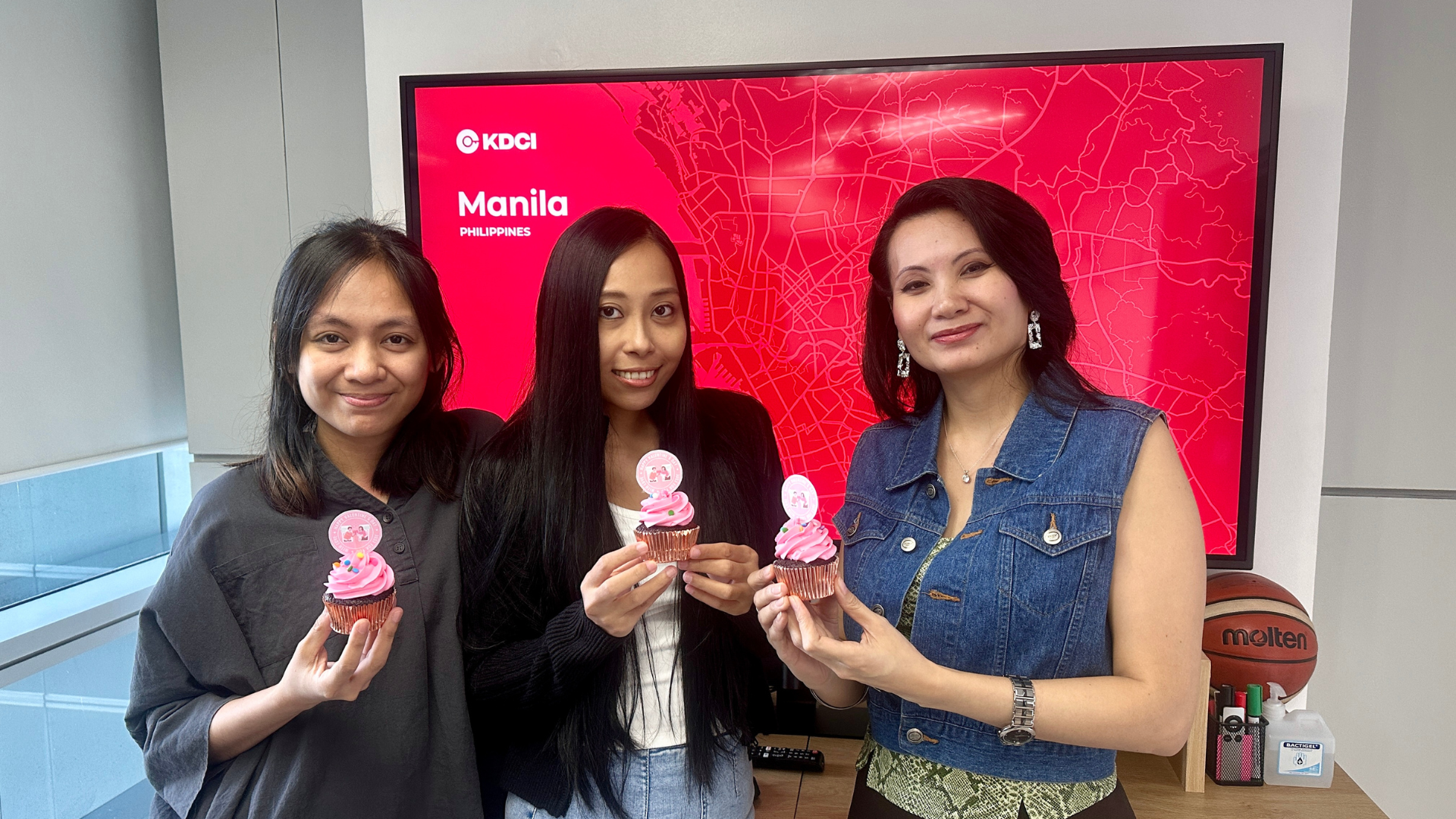
Valentine's Day 2024 at KDCI is a memorable celebration of love, creativity, and teamwork. As we continue to nurture our company culture, events like these remind us of the joy in collaboration and the beauty in celebrating our collective spirits. Here's to many more celebrations where we can say, "Bagay Pa Rin Tayo."
This Valentine's Day, KDCI once again proves that when we come together, creativity knows no bounds, and every day is an opportunity to celebrate the connections that make us stronger.
As KDCI celebrates Valentine’s Day 2024, we honor each and every member of our team. Each occasion is an opportunity to relive the spirit that fuels KDCI every day, and we invite you to be a part of this dynamic environment!
If you're passionate about knowledge, dedication, collaboration, and innovation, we're looking for individuals like you to join our team. Embrace the opportunity to work in a place where your ideas are valued, your growth is prioritized, and your contributions make a real difference.
Join KDCI and see how you can become a part of our ever-growing family.
Already a part of the KDCI team? Leave us a good review on Google!

Small and medium enterprises (SMEs) face the challenge of delivering exceptional customer service while managing resources efficiently. This is where customer service outsourcing companies come into play, offering specialized support to enhance customer experience and streamline operations.
In this article, we’ll delve into the best customer service outsourcing companies tailored for SMEs. We included options that not only fit your budget but also align with your business values, ensuring that your customer support is nothing short of excellent.
The first customer service outsourcing company on our list is KDCI Outsourcing. Founded in 2011 and based in Ortigas, Pasig, Philippines, they specialize in offering customized outsourcing solutions, particularly in building offshore teams in areas of customer service, web and graphic design, digital marketing, and many more.
Key features of their outsourced customer service include a team of experienced customer service specialists vetted and trained for your brand, streamlined customer service operations, as well as managed operations with regular reporting and feedback.
For small to medium enterprises, KDCI will be a good choice due to the customizable nature of their service.
Not to mention, they’ve worked with companies from various industries and have a track record of going beyond offering a service, helping their partners streamline operations and hit their business goals. Getting this concoction of versatility, specialized expertise, and tailored solutions can give SMEs the support they need to expand capabilities and streamline processes without the need for extensive in-house teams and additional resources.
BPO Hive specializes in providing outsourced customer service, particularly to skilled professionals from Egypt, for roles like sales, customer support, and virtual assistance.
The company focuses on providing native-level English speakers to enhance customer interactions. The company stands out for its personalized approach and commitment to connecting businesses with the right talent
Tailoring their services to individual business needs, BPO Hive offers a cost-effective, efficient customer service outsourcing solution for companies, especially small to medium enterprises looking to provide great customer service and scale operations without the high costs of an in-house team.
Founded in 2002 and based in Buford, Georgia, VoiceNation provides live answering services, including virtual receptionist and live chat features, primarily catering to small and medium-sized businesses in sectors like legal, real estate, and healthcare. Their services, available 24/7, include bilingual answering, custom scripting, and outbound calling.
This customer service outsourcing company's combination of skilled agents, advanced technology, and flexible pricing makes them a compelling choice for small to medium businesses who want to start outsourcing customer service, prioritizing reliable call answering and virtual receptionist services.
Enshored is a customer service company specializing in catering to fast-growing and disruptive startups. The company, headquartered in Long Beach, California, with additional offices in Pasig City, Philippines, focuses on providing tailored solutions to meet the unique challenges of rapidly scaling businesses.
Enshored's team, which has been expanding consistently, offers a range of services including customer experience, content moderation, sales and marketing, and back office support.
This customer service company’s approach is particularly adaptable and scalable, making them well-suited for dynamic business environments. Startups and scale-ups who want to outsource customer service can rely on Enshored to provide crucial support during critical growth phases.
Solvo Global, founded in 2014 and headquartered in The Woodlands, Texas, specializes in providing voice services and various back-office services. They offer customer service outsourcing, which aims to elevate client relations through top-tier customer support and client relations professionals.
The company’s services are designed to improve customer satisfaction and loyalty, an aspect crucial for businesses aiming for long-term success. This strategic approach to customer service, combined with a focus on quality talent and cost-effectiveness, makes Solvo Global an appealing choice for small to medium enterprises.
Veta Virtual, established in 2020 and headquartered in Toronto, Canada, is a little different from other customer service outsourcing companies. They specialize in providing virtual receptionist and assistant services.
The company offers a range of services including technical support, inbound and outbound calls, call screening and forwarding, appointment scheduling, and voicemail box management. Their approach is tailored to individual business needs, allowing clients to choose services that best fit their requirements.
Veta Virtual's key advantage lies in its cost-efficiency, allowing businesses to pay only for needed services, which is especially beneficial for budget-conscious small to medium-sized enterprises (SMEs). Additionally, their scalable services adapt to a business's growth, offering increased support as the company expands.
Moneypenny, established in 2000 and based in Duluth, Georgia, is a customer support outsourcing company that specializes in call answering and managed live chat services. The company's services include virtual receptionist services, managed live chat, and contact center teams, all designed to ensure seamless customer management around the clock.
The company's scalable services, tailored to SMEs' customer service needs and emphasis on real human interactions over automation, make it an appealing choice for those seeking to boost their customer service experience affordably without the expense of in-house staffing.
AnswerForce, established in 2003 and headquartered in Portland, Oregon, is a prominent provider of call answering services.
A key feature of AnswerForce is their distributed customer service model, which ensures quick and efficient handling of calls by friendly agents spread across different locations. This model not only accommodates fluctuating call volumes but also provides business continuity in various situations.
For small to medium enterprises (SMEs), AnswerForce's services are particularly beneficial due to their flexibility and cost-effectiveness. Their scalable solutions, capable of accommodating varying call volumes while still meeting customer expectations, make them an ideal partner for growing businesses.
24H Virtual is a voice and customer service agency based in Toronto, Canada, specializing in voice services for small and mid-market companies. They are one of the customer service companies that offer a range of services such as virtual receptionist, live chat support, and auto receptionist, ensuring 24/7 customer support.
The company stands out for its use of virtual intelligence to manage customer interactions effectively. This includes reducing employee overheads and ensuring each potential client receives appropriate service.
24H Virtual’s services are designed to be cost-effective, efficient, and scalable, making them a suitable choice for small to medium enterprises (SMEs) looking to improve efficiency and customer satisfaction.
The last customer service outsourcing company on our list is Helpware. They were established in 2015 in Lexington, Kentucky, and they specialize in business process outsourcing (BPO) services, with additional offices in Germany, Mexico, the Philippines, and Ukraine.
Helpware provides customer support via phone, chat, email, in-app, and social media, alongside technical and back-office support services including content moderation and data entry.
For small to medium enterprises, partnering with a company like Helpware can offer significant benefits. Their ability to provide high-quality, tailored services, coupled with their global reach and expertise in both customer support and back-office functions, makes them a viable option for businesses looking to outsource these aspects effectively.
There are a lot of customer service outsourcing companies in the world, and as an SME, you may find it difficult to find a customer service outsourcing company that can understand and meet your needs without going over your budget.
With KDCI, we understand the unique requirements of SMEs and tailor our customer service to your needs. Tell us your business goals and we’ll build you a team of customer service agents who are vetted, trained, and certified for your brand.
Delight your customers with the best offshore customer service team in the Philippines. Visit KDCI.co to learn more.

With a massive workforce of over 1.3 million customer support agents and more than 700 call centers in the Philippines, there’s no question why plenty of international online retail brands have been recognizing the opportunities offered by the country’s call center industry.
To help you choose which Philippine call center company to work with, we listed the top 10 call centers in the Philippines based on their Google ratings, ranked in no particular order. Let’s go through each one in the following sections.
The call center industry in the Philippines first emerged when Frank Holz founded the first call center company in 1992. Three years later, in 1995, the Special Economic Zone Act was passed by the Philippine Congress — which underscored the establishment of the Philippine Economic Zone Authority (PEZA). Since then, it has been a significant part of the country's BPO industry.
Fueled by a large, English-speaking workforce, cultural alignment with Western countries, and competitive labor costs, the Philippines quickly became a global hotspot for call centers. Over the years, the call center outsourcing field has expanded dramatically, contributing significantly to the nation's economic growth and becoming a key employer for a diverse range of skills and educational backgrounds — thus becoming the world’s call center capital.Philippines
There are several call centers in the Philippines, but there are 10 main companies that stand out
Although there are hundreds of BPO companies and call centers in the Philippines, only the following Filipino call centers have made the cut.
Based in Pasig City, Metro Manila, KDCI builds a call center team for businesses looking to build an extension of their customer service in the Philippines. They focus on delivering high-quality and efficient customer service by offering tailored solutions for every business’s call center needs. Here are the features you can expect from their call center services:
KDCI ensures that your call center team can provide digital customer service support according to your brand’s voice, values, and goals by providing on-brand training to customer support agents. The process starts with a call with KDCI to talk about your call center needs.
From there, their recruitment powerhouse will find, screen, interview, and hire the right call center agent. They will train the agents who passed the hiring process based on your brand’s training manual.
With KDCI’s personalized call center solutions, you can deploy as many offshore customer service agents as you need for whatever channel — be it email, live chat, or phone. These agents are already certified, which means they have passed assessments to ensure they can provide the level and quality of customer service you need.
KDCI’s call center operations don’t end with providing you with a reliable call center agent support team. They will also manage your customer service operations for more efficient quality assurance. You will also get a dedicated account manager who will gather relevant customer service insights and data to give your business an overview of the necessary improvements.
One of the best call centers in Taguig, Philippines, Sutherland Global Services offers a comprehensive suite of customer interaction services designed to enhance customer engagement and improve business outcomes. Their call center services focus on delivering exceptional customer experiences across various channels. Here are the key features of their call center services:
Sutherland Global Services provides support across multiple channels, including voice, chat, email, and many more. This ensures a seamless and consistent customer experience, regardless of the channel.
By leveraging data analytics, Sutherland offers insights that help gain better insights into customers’ needs and preferences, enabling more personalized interactions.
This Taguig-based call center company offers support in multiple languages. Their global presence also enables them to understand local market nuances, making their services more effective.
The outsourcing call center services of Sutherland Global Services are designed to be scalable, allowing businesses to adjust their level of support based on demand.
Sutherland Global Services invests in thorough training programs for their agents, ensuring high-quality customer service and support.
The call center company integrates advanced technologies like AI and machine learning to streamline processes and enhance customer interactions.
Concentrix, a global leader in customer experience solutions and technology, offers a comprehensive customer experience (CX) Strategy designed to enhance customer engagement and drive business growth. Their approach to CX strategy revolves around several key components, including the following:
Concentrix’s call center operations focus on understanding the customer journey to identify critical touchpoints and opportunities for enhancing the customer experience.
This call center service company emphasizes the importance of a cohesive experience across all channels, ensuring that customers receive consistent and effective service whether they interact online, over the phone, or through other channels.
Concentrix uses data and analytics to tailor experiences to individual customer needs and preferences, aiming to make each interaction as relevant and engaging as possible.
By leveraging the latest technologies, Concentrix aims to constantly innovate and improve the customer experience.
Recognizing the link between employee and customer satisfaction, Concentrix also focuses on enhancing the employee experience to ensure their Filipino call center agents stay motivated and engaged.
Alorica offers a range of customer experience solutions aimed at transforming the way businesses interact with their customers. Their call center operations are designed to cater to the diverse needs of their clients and ensure exceptional customer experiences. Here are some key aspects of their call center services:
Alorica specializes in creating customized customer experience strategies that are aligned with the unique needs of each business. This includes everything from customer service to technical support and sales solutions.
Embracing the digital transformation, Alorica provides digital solutions that enhance online customer interactions, including chatbots and other AI-driven technologies.
With a widespread global presence, Alorica offers multi-language support and understands the nuances of various local markets.
Utilizing data analytics, they offer valuable insights to help understand and predict customer behavior, enabling businesses to make informed decisions.
Alorica provides tailored solutions for various industries, ensuring the unique challenges and requirements of different sectors are effectively met.
Recognizing the importance of human resources in delivering quality customer service, Alorica also offers workforce management solutions.
A product of the Sitel and Sykes Enterprises merger, Foundever offers a suite of customer experience solutions aimed at fostering meaningful customer interactions and driving business growth. Here are some of the key components of their outsourcing call center services.
Sitel provides a range of CX services including customer support, sales, technical support, and social media management. They focus on creating a seamless and positive experience across all customer touchpoints.
Their services are designed to deliver a consistent and integrated experience across various communication channels, such as voice, email, chat, and social media.
Leveraging advanced data analytics, this call center outsourcing company offers insights to understand customer behavior and preferences, enabling businesses to tailor their services accordingly.
With operations around the world, this call center outsourcing company is equipped to handle customer interactions in multiple languages and cultural contexts, ensuring a global reach with local expertise.
The integration of AI and other cutting-edge technologies into their solutions helps enhance efficiency and customer engagement.
Foundever places a strong emphasis on their human resources, providing training and development to ensure a skilled and motivated workforce.
Teleperformance offers a host comprehensive suite of digital customer experience solutions, enhanced with AI technologies, to provide effective and efficient customer service. Their digital CX services include the following.
Based in the cloud and powered by AI, Teleperformance’s TP Microservices features scalable Customer Experience Management (CEM) solutions that summarize text, create content, determine intent, and many more.
An AI-powered chatbot that enhances the customer experience by providing instant, automated responses to customer queries. It can also seamlessly transfer complex interactions to human agents.
This call center outsourcing company provides social media and messaging services to engage customers on platforms where they are most active.
Leveraging data analytics, Teleperformance offers insights that help businesses optimize their customer service processes and strategies.
This is a virtual solution that offers flexibility and scalability in managing remote teams, enabling efficient and effective customer service operations from anywhere.
Previously named TeleTech, TTEC offers a broad range of customer experience and contact center services designed to enhance customer engagement and business outcomes. Their services focus on integrating technology and human expertise to deliver seamless customer interactions. Here are some of the things they offer:
This Philippine call center company provides end-to-end customer service solutions, handling everything from basic inquiries to complex issues across various channels.
They offer sales and marketing solutions that help increase customer acquisition, retention, and growth.
TTEC utilizes analytics and consulting expertise to help businesses understand customer behaviors and preferences and optimize their customer engagement strategies.
Incorporating advanced technologies, the Philippine call center company offers solutions such as omnichannel platforms, AI, and automation tools, to enhance customer interaction and operational efficiency.
Recognizing the importance of a skilled and engaged workforce, TTEC provides solutions for workforce training, management, and optimization.
TTEC also offers specialized customer services for the healthcare industry, ensuring compliance and high-quality customer interactions.
Sourcefit specializes in providing customized outsourcing solutions, including customer support services. Their customer support services are tailored to meet the specific needs of businesses across various industries. Below are the key features of Sourcefits’ call center services:
Like other BPO companies, Sourcefit focuses on understanding each client's unique requirements to deliver tailored customer support services.
They offer support across various channels, including phone, email, chat, and social media, ensuring a seamless experience for customers.
Sourcefit employs experienced Filipino call center agents who are trained to handle a wide range of customer queries and issues effectively.
Their services are scalable, allowing businesses to adjust their level of support based on fluctuating demands and growth.
Sourcefit aims to provide high-quality customer support services at competitive rates, helping businesses manage costs without compromising the quality of service.
Their approach is centered on enhancing customer satisfaction, which is crucial for building customer loyalty and improving business outcomes.
VXI Global Solutions, or VXI, offers a comprehensive suite of customer experience and care solutions designed to enhance customer interactions and drive business growth. Their customer experience care services are focused on several key areas, specifically the ones below:
VXI provides support across multiple channels, ensuring a consistent and seamless customer experience whether through voice, chat, email, or social media.
They offer a range of customer support services, from basic inquiry handling to more complex issue resolution.
VXI places a strong emphasis on high-quality customer interactions, employing rigorous quality assurance processes to ensure high standards are met.
Utilizing advanced analytics, VXI delivers insights that help businesses understand customer needs and improve service delivery.
With a global presence, VXI can scale operations to meet the demands of businesses of all sizes across various regions.
This Philippine call center incorporates AI and machine learning to enhance efficiency and customer engagement.
ManilaPros’ call center services revolve around providing the best customer care for retail businesses. They offer dedicated customer service solutions that are designed to meet the specific needs of businesses seeking outsourced support. Their customer care plan includes the following key features:
They provide customer support services that can be tailored to fit the unique requirements of different businesses, ensuring a personalized approach to customer care.
ManilaPros will provide you with professional Filipino call center agents who went through specialized on-brand training, making them capable of handling a wide range of customer inquiries and concerns while still being able to showcase your brand’s voice and values.
Their services are not limited to voice calls; they also extend to email, chat, and other digital communication channels, offering an omnichannel experience to customers.
ManilaPros aims to ensure that your call center stays at the top of its performance by managing your customer care operations for you. This is crucial in quality assurance, so you can focus on your core business operations.
ManilaPros provides valuable data-driven insights and feedback to help your business understand its current state and potential needs and improvements.
To successfully outsource your customer service needs to the Philippines, choose a call center company that understands your needs and knows what steps to take to bring you closer to your business goals.
At KDCI, we will build you a competent call center agent team based on your unique requirements. We will thoroughly vet and train your agents for your brand, integrate them into your environment, and manage your customer service with you. Whether you need one agent or a full offshore team, and whether you opt for call centers in Cebu Philippines or call centers in Manila Philippines, KDCI has got you covered.
Learn more about how we will build your offshore customer service team. Contact us today!

Delivering the best customer experience possible requires a highly capable customer service team. This team should have a mastery of not only your brand but also the market you’re in.
But with thousands of agents to choose from, selecting the right people for your team can be incredibly challenging. That’s why most successful brands choose to work with reliable agencies like KDCI to help build and manage their customer service team for the best results.
Key Discovery Consulting, Inc. (KDCI), established in 2011 in Pasig, Philippines by seasoned executives, stands out for its exceptional customer service. With over 20 years of experience, the company excels in delivering tailored customer support solutions, setting a high standard in the outsourcing industry. Alongside their customer service expertise, KDCI offers creative design, back office support, web development, Ecommerce support, and digital marketing services.
Serving industries like Ecommerce, retail, real estate, health, food, technology, and finance, KDCI's primary aim is to enhance business efficiency, particularly through superior customer interactions. Their mission and vision are focused on continuous improvement, driving companies forward with exceptional teams, and placing a significant emphasis on the quality of customer service.
Building an effective customer service team is crucial for any growing business, especially for small to medium-sized companies. Here are the common challenges that may make it difficult for the company.
As a business grows, so does the volume of customer inquiries and issues. Scaling customer service operations to keep up with this increase is a significant challenge. Apart from requiring additional agents, it also involves the need to ensure that the infrastructure, processes, and resources are in place to handle a larger workload without compromising service quality.
This scaling must be efficient and flexible, allowing for adjustments during peak seasons or unexpected surges in customer queries. The key is to grow the team in a way that aligns with the company's evolving needs while maintaining a high level of customer satisfaction.
Another major challenge is recruiting and training customer service agents who are not only skilled but also align with the brand's values and approach. It's essential to have a specialized on-brand training program that equips agents with the necessary knowledge about the company's products, services, and customer service protocols.
Companies also need to ensure that agents know beyond the technical know-how, and are trained in soft skills like empathy, patience, and effective communication. Developing these skills is crucial for ensuring that customer interactions are handled professionally and positively, reflecting well on the brand.
Maintaining a consistent level of service quality as the team expands can be daunting. Consistency in customer service is vital for building trust and loyalty among customers. This means every customer interaction, regardless of which agent handles it, should meet certain standards of quality and professionalism.
Achieving this requires regular training, performance monitoring, and feedback mechanisms. Additionally, it's important to implement standard operating procedures and service level agreements (SLAs) to ensure that all team members are on the same page regarding how customer interactions should be managed.
KDCI Outsourcing has developed a comprehensive approach to assembling a customer service team that not only meets but exceeds the expectations of small to medium-sized companies. Here are the strategies we use to achieve this.
At KDCI, we understand that each business has unique needs and challenges. Our first step is to engage closely with our clients to understand their brand, customer base, and specific customer service requirements.
This deep dive allows us to tailor our services specifically to each client, ensuring that the customer service team we build for them aligns perfectly with their business objectives and brand values. Whether it's handling high-volume inquiries or providing specialized support, our customized approach ensures that all client needs are met with precision.
We take pride in our robust recruitment process. With the help of KDCI’s recruitment powerhouse, we can tap into a vast pool of talented customer service professionals and take care of finding, screening, and vetting the right talents. Our vetting process is rigorous, involving multiple stages of interviews and assessments to ensure that we only hire the best. This thorough approach ensures that our team is not just skilled but also a good fit for the specific requirements and culture of our client's brand.
Our agents receive specialized on-brand training tailored to each client's brand, going beyond basic customer service to encompass in-depth product knowledge, understanding of the brand's tone and communication style, and strategies for creating memorable customer experiences. This ensures seamless, integrated representation of our clients' brands, as if part of their in-house team. Following training, agents undergo a rigorous certification process to evaluate their knowledge and skills, upholding KDCI's high standards for customer service excellence. Only certified agents are assigned to client projects, ensuring top-tier support from vetted professionals.
Our commitment doesn't end with building the team. KDCI provides managed operations to oversee the customer service team in the long run. This includes continuous monitoring, regular feedback sessions, and performance analytics to ensure ongoing improvement and adaptation to changing needs. Our managed operations model ensures that the customer service team remains dynamic, efficient, and always aligned with the client's evolving business objectives.
To build your customer service dream team, work with a trusted customer service outsourcing provider that understands what your business needs.
At KDCI, we’ll build you a team of customer service agents based on your unique requirements. Be it one or several offshore agents, we’ll provide you with customer support professionals who are screened, vetted, trained, and certified for your brand, ensuring that you get high-quality service. If required, we’ll also provide you with a dedicated account manager who can oversee your CS operations for you.
Learn more about how we can build your customer service dream team. Click on the button below to get started.

Delivering the best customer experience possible requires a highly capable customer service team. This team should have a mastery of not only your brand but also the market you’re in.
But with thousands of agents to choose from, selecting the right people for your team can be incredibly challenging. That’s why most successful brands choose to work with reliable agencies like KDCI to help build and manage their customer service team for the best results.
Key Discovery Consulting, Inc. (KDCI), established in 2011 in Pasig, Philippines by seasoned executives, stands out for its exceptional customer service. With over 20 years of experience, the company excels in delivering tailored customer support solutions, setting a high standard in the outsourcing industry. Alongside their customer service expertise, KDCI offers creative design, back office support, web development, Ecommerce support, and digital marketing services.
Serving industries like Ecommerce, retail, real estate, health, food, technology, and finance, KDCI's primary aim is to enhance business efficiency, particularly through superior customer interactions. Their mission and vision are focused on continuous improvement, driving companies forward with exceptional teams, and placing a significant emphasis on the quality of customer service.
Building an effective customer service team is crucial for any growing business, especially for small to medium-sized companies. Here are the common challenges that may make it difficult for the company.
As a business grows, so does the volume of customer inquiries and issues. Scaling customer service operations to keep up with this increase is a significant challenge. Apart from requiring additional agents, it also involves the need to ensure that the infrastructure, processes, and resources are in place to handle a larger workload without compromising service quality.
This scaling must be efficient and flexible, allowing for adjustments during peak seasons or unexpected surges in customer queries. The key is to grow the team in a way that aligns with the company's evolving needs while maintaining a high level of customer satisfaction.
Another major challenge is recruiting and training customer service agents who are not only skilled but also align with the brand's values and approach. It's essential to have a specialized on-brand training program that equips agents with the necessary knowledge about the company's products, services, and customer service protocols.
Companies also need to ensure that agents know beyond the technical know-how, and are trained in soft skills like empathy, patience, and effective communication. Developing these skills is crucial for ensuring that customer interactions are handled professionally and positively, reflecting well on the brand.
Maintaining a consistent level of service quality as the team expands can be daunting. Consistency in customer service is vital for building trust and loyalty among customers. This means every customer interaction, regardless of which agent handles it, should meet certain standards of quality and professionalism.
Achieving this requires regular training, performance monitoring, and feedback mechanisms. Additionally, it's important to implement standard operating procedures and service level agreements (SLAs) to ensure that all team members are on the same page regarding how customer interactions should be managed.
KDCI Outsourcing has developed a comprehensive approach to assembling a customer service team that not only meets but exceeds the expectations of small to medium-sized companies. Here are the strategies we use to achieve this.
At KDCI, we understand that each business has unique needs and challenges. Our first step is to engage closely with our clients to understand their brand, customer base, and specific customer service requirements.
This deep dive allows us to tailor our services specifically to each client, ensuring that the customer service team we build for them aligns perfectly with their business objectives and brand values. Whether it's handling high-volume inquiries or providing specialized support, our customized approach ensures that all client needs are met with precision.
We take pride in our robust recruitment process. With the help of KDCI’s recruitment powerhouse, we can tap into a vast pool of talented customer service professionals and take care of finding, screening, and vetting the right talents. Our vetting process is rigorous, involving multiple stages of interviews and assessments to ensure that we only hire the best. This thorough approach ensures that our team is not just skilled but also a good fit for the specific requirements and culture of our client's brand.
Our agents receive specialized on-brand training tailored to each client's brand, going beyond basic customer service to encompass in-depth product knowledge, understanding of the brand's tone and communication style, and strategies for creating memorable customer experiences. This ensures seamless, integrated representation of our clients' brands, as if part of their in-house team. Following training, agents undergo a rigorous certification process to evaluate their knowledge and skills, upholding KDCI's high standards for customer service excellence. Only certified agents are assigned to client projects, ensuring top-tier support from vetted professionals.
Our commitment doesn't end with building the team. KDCI provides managed operations to oversee the customer service team in the long run. This includes continuous monitoring, regular feedback sessions, and performance analytics to ensure ongoing improvement and adaptation to changing needs. Our managed operations model ensures that the customer service team remains dynamic, efficient, and always aligned with the client's evolving business objectives.
To build your customer service dream team, work with a trusted customer service outsourcing provider that understands what your business needs.
At KDCI, we’ll build you a team of customer service agents based on your unique requirements. Be it one or several offshore agents, we’ll provide you with customer support professionals who are screened, vetted, trained, and certified for your brand, ensuring that you get high-quality service. If required, we’ll also provide you with a dedicated account manager who can oversee your CS operations for you.
Learn more about how we can build your customer service dream team. Click on the button below to get started.

Balancing creativity, cost, and market relevance in graphic design is something that a lot of online retail brands struggle with. This is why leading brands like Tiffany & Co. and Adidas led to a global solution - outsourcing to the Philippines, a destination emerging as a graphic design hub for online retail brands.
The question is, why do online retail brands outsource graphic design to the Philippines? What are the advantages that this developing country can offer? Let’s answer those questions in this article.
One of the top reasons why online retail brands outsource graphic design work to the Philippines lies in the expertise of Filipino designers in contemporary graphic design techniques. This proficiency enables them to understand and apply design principles that effectively communicate a brand's message and appeal to its target audience.
Filipino designers are trained to craft designs that are not only visually appealing but also strategically aligned with the brand's marketing objectives. This includes an understanding of color theory, typography, layout, and visual hierarchy, all of which are essential in creating designs that attract and retain customer attention.
This is further enhanced by companies like KDCI, who provide on-brand training to their graphic designers. This process involves mastery of the brand’s voice, values, and goals, which help them deliver excellent designs for your brand.
The vibrant creative culture in the Philippines significantly contributes to its appeal as a destination for outsourcing graphic design, especially for online retail brands looking to outsource. This culture fosters an environment where innovation and creativity are not just encouraged but celebrated.
This ability is crucial in the online retail space, which is notoriously crowded and competitive. Brands are constantly vying for consumer attention, and standard, run-of-the-mill designs often fail to make an impact. Filipino designers, with their fresh and unique graphic design perspectives, can provide the creative edge that brands need to stand out.
This unique blend is particularly appealing to online retail brands that aim to appeal to a diverse, international audience. By offering designs that are both universally appealing and distinctively original, Filipino designers help brands carve out their own space in the digital marketplace.
Another reason why brands outsource graphic design to the Philippines is due to the versatility of Filipino graphic designers. This is shaped by their exposure to a wide array of both local and international design influences, something that an in-house design team can lack, which stands as a significant advantage for online retail brands targeting a global market.
This exposure equips them with a unique capability to understand and integrate various aesthetic sensibilities and cultural nuances into their designs, making their graphic design work universally appealing yet distinctively nuanced.
Filipino designers, with their broad design vocabulary, can adeptly navigate through different styles - be it minimalist, contemporary, traditional, or avant-garde. This flexibility allows them to create designs that not only align with the brand's identity but also appeal to the cultural and aesthetic preferences of a global customer base.
The rapid growth of the digital sector in the Philippines has had a substantial impact on the capabilities of Filipino designers, particularly in the fields of e-commerce and online marketing. This environment has fostered a generation of designers who are not only creatively gifted but also highly attuned to the latest trends and best practices in the digital world.
Filipino designers, with their deep understanding of e-commerce dynamics, are adept at creating graphic design works that are more than just visually striking. They excel in crafting designs that are tailored to the nuances of online retail platforms, considering factors like user interface design, mobile responsiveness, and visual engagement.
Their designs are created with an inherent understanding of digital marketing strategies. This includes an awareness of how visuals impact consumer behavior online, the role of web design in search engine optimization (SEO), and the effectiveness of various graphic elements in social media marketing.
Online brands also outsource graphic design because of the proficiency of Filipino designers in visual storytelling. This is a key asset in retail, where the ability to communicate brand messages clearly and effectively through graphics is essential. At the same time, it's also a common struggle in graphic design outsourcing to find designers who are both good at their work and communicating.
This ability to effectively communicate brand messages through graphics is crucial in the competitive world of online retail. For businesses looking to establish a strong online presence and connect with their audience, the visual storytelling expertise of Filipino designers is an invaluable resource.
Visual storytelling, at its core, is about conveying a narrative or message through visual media. Filipino designers excel in this area by creating graphics that do more than just attract the eye; they weave a story that resonates with the viewer. Such storytelling is crucial in building a connection with customers, especially in an online setting where direct, personal interaction is limited.
Another factor that pushes brands to outsource graphic design to Filipino designers is their flexibility, which allows them to create designs that fit with the requirements of different brands. Their experience in dealing with a diverse range of clients from various parts of the world has honed their ability to quickly understand and align with specific brand guidelines and aesthetics.
Filipino designers excel in blending a brand's core identity with fresh, innovative designs, suitable for both startups and established brands. Their skills ensure outsourced design work integrates seamlessly with existing branding, comparable to in-house designers.
This ability is particularly beneficial in the fast-paced online retail sector, where maintaining a cohesive brand image across various platforms – websites, social media, email campaigns – is essential for building brand recognition and customer loyalty.
The versatility of Filipino designers in handling a wide range of graphic design projects is a significant advantage for online retail brands looking for comprehensive graphic design solutions. Having designers who can cater to your various design needs can help you cope and set yourself apart in today’s fast-paced and diverse retail market.
Filipino designers possess experience and expertise that span across multiple facets of graphic design. This includes but is not limited to, web design, logo design, and product packaging, which requires a keen understanding of both aesthetic appeal and practical functionality. Moreover, their designs are not only eye-catching but also effectively communicate the product's brand and values.
Having a wide range of skills makes the Philippines a one-stop solution for all the design needs of online retail brands. Instead of coordinating with multiple design sources, brands can rely on a team of designers to handle their diverse graphic design needs, ensuring a cohesive and consistent visual identity across all their marketing and retail platforms.
The Philippines' reputation for rapid adaptation to new technologies and trends in digital design is a significant advantage for online retail brands looking to outsource graphic design and still stay ahead in a constantly evolving market. Filipino designers are recognized for their agility in embracing and mastering new design tools and software, placing them at the cutting edge of design technology.
Filipino designers stay abreast of the latest developments in digital design, from emerging design software to innovative techniques. This ensures that their graphic design services are always equipped with the most advanced tools and knowledge to create cutting-edge designs.
Their proficiency with new technologies extends beyond just using the latest software. It includes understanding how these new tools can be best utilized to enhance the design process and online retail experience. For example, they might leverage augmented reality (AR) to create immersive product previews or utilize advanced animation techniques to make digital advertisements more engaging.
The Philippines' rich culture has a great influence on its design aesthetics, creating a unique blend of Eastern and Western elements. The Filipino aesthetic that guides graphic designers is shaped by a history of diverse cultural interactions, resulting in designs that effortlessly combine the intricate and vibrant patterns of Eastern art with the bold and streamlined aspects of Western design.
Moreover, the cultural diversity reflected in Filipino outsourced design services allows online retail brands to present themselves as inclusive and globally oriented. The ability to incorporate elements from various cultures into their designs helps these brands connect with a broader audience, making their products and services more appealing to customers from different backgrounds.
For online retail brands, leveraging the culturally diverse and unique design services offered by Filipino designers can be a strategic move. It not only enhances the visual appeal of their offerings but also positions their brand as diverse, inclusive, and globally relevant in today's interconnected world.
Filipino designers are not just skilled artisans; they are also deeply committed to ensuring that when clients outsource their graphic design, they are fully satisfied with the work delivered. This service-oriented approach is ingrained in the Filipino work culture and is a critical aspect that sets them apart in the global outsourcing market.
This commitment to customer satisfaction means that Filipino designers are typically more open to feedback and revisions, ensuring that the final product truly aligns with the client's vision and requirements. They understand that in the online retail space, the success of their designs is measured not just by aesthetic appeal, but by how well they meet the business objectives of their clients.
For online retail brands, this means working with a partner who is genuinely invested in the success of their outsourced design services. The combination of artistic talent, technical proficiency, and a strong service ethic makes Filipino designers valuable allies in the highly competitive world of online retail.
To successfully outsource graphic design to the Philippines, work with a trusted company that understands your needs, just like KDCI.
At KDCI, we can build you a team of talented graphic designers that can cater to your needs. They can design presentations, social media graphics, infographics, illustrations, videos, websites, and more. Our designers go through in-depth on-brand training, so you can rest assured that their works will reflect your brand’s messaging, voice, and values. View our full portfolio here.
Learn more about how you can get a team of designers in the Philippines. Click the button below to get started.

Balancing creativity, cost, and market relevance in graphic design is something that a lot of online retail brands struggle with. This is why leading brands like Tiffany & Co. and Adidas led to a global solution - outsourcing to the Philippines, a destination emerging as a graphic design hub for online retail brands.The question is, why do online retail brands outsource graphic design to the Philippines? What are the advantages that this developing country can offer? Let’s answer those questions in this article.
One of the top reasons why online retail brands outsource graphic design work to the Philippines lies in the expertise of Filipino designers in contemporary graphic design techniques. This proficiency enables them to understand and apply design principles that effectively communicate a brand's message and appeal to its target audience.Filipino designers are trained to craft designs that are not only visually appealing but also strategically aligned with the brand's marketing objectives. This includes an understanding of color theory, typography, layout, and visual hierarchy, all of which are essential in creating designs that attract and retain customer attention.This is further enhanced by companies like KDCI, who provide on-brand training to their graphic designers. This process involves mastery of the brand’s voice, values, and goals, which help them deliver excellent designs for your brand.
The vibrant creative culture in the Philippines significantly contributes to its appeal as a destination for outsourcing graphic design, especially for online retail brands looking to outsource. This culture fosters an environment where innovation and creativity are not just encouraged but celebrated.This ability is crucial in the online retail space, which is notoriously crowded and competitive. Brands are constantly vying for consumer attention, and standard, run-of-the-mill designs often fail to make an impact. Filipino designers, with their fresh and unique graphic design perspectives, can provide the creative edge that brands need to stand out.This unique blend is particularly appealing to online retail brands that aim to appeal to a diverse, international audience. By offering designs that are both universally appealing and distinctively original, Filipino designers help brands carve out their own space in the digital marketplace.
Another reason why brands outsource graphic design to the Philippines is due to the versatility of Filipino graphic designers. This is shaped by their exposure to a wide array of both local and international design influences, something that an in-house design team can lack, which stands as a significant advantage for online retail brands targeting a global market.This exposure equips them with a unique capability to understand and integrate various aesthetic sensibilities and cultural nuances into their designs, making their graphic design work universally appealing yet distinctively nuanced.Filipino designers, with their broad design vocabulary, can adeptly navigate through different styles - be it minimalist, contemporary, traditional, or avant-garde. This flexibility allows them to create designs that not only align with the brand's identity but also appeal to the cultural and aesthetic preferences of a global customer base.
The rapid growth of the digital sector in the Philippines has had a substantial impact on the capabilities of Filipino designers, particularly in the fields of e-commerce and online marketing. This environment has fostered a generation of designers who are not only creatively gifted but also highly attuned to the latest trends and best practices in the digital world.Filipino designers, with their deep understanding of e-commerce dynamics, are adept at creating graphic design works that are more than just visually striking. They excel in crafting designs that are tailored to the nuances of online retail platforms, considering factors like user interface design, mobile responsiveness, and visual engagement.Their designs are created with an inherent understanding of digital marketing strategies. This includes an awareness of how visuals impact consumer behavior online, the role of web design in search engine optimization (SEO), and the effectiveness of various graphic elements in social media marketing.
Online brands also outsource graphic design because of the proficiency of Filipino designers in visual storytelling. This is a key asset in retail, where the ability to communicate brand messages clearly and effectively through graphics is essential. At the same time, it's also a common struggle in graphic design outsourcing to find designers who are both good at their work and communicating.This ability to effectively communicate brand messages through graphics is crucial in the competitive world of online retail. For businesses looking to establish a strong online presence and connect with their audience, the visual storytelling expertise of Filipino designers is an invaluable resource.Visual storytelling, at its core, is about conveying a narrative or message through visual media. Filipino designers excel in this area by creating graphics that do more than just attract the eye; they weave a story that resonates with the viewer. Such storytelling is crucial in building a connection with customers, especially in an online setting where direct, personal interaction is limited.
Another factor that pushes brands to outsource graphic design to Filipino designers is their flexibility, which allows them to create designs that fit with the requirements of different brands. Their experience in dealing with a diverse range of clients from various parts of the world has honed their ability to quickly understand and align with specific brand guidelines and aesthetics.Filipino designers excel in blending a brand's core identity with fresh, innovative designs, suitable for both startups and established brands. Their skills ensure outsourced design work integrates seamlessly with existing branding, comparable to in-house designers.This ability is particularly beneficial in the fast-paced online retail sector, where maintaining a cohesive brand image across various platforms – websites, social media, email campaigns – is essential for building brand recognition and customer loyalty.
The versatility of Filipino designers in handling a wide range of graphic design projects is a significant advantage for online retail brands looking for comprehensive graphic design solutions. Having designers who can cater to your various design needs can help you cope and set yourself apart in today’s fast-paced and diverse retail market.Filipino designers possess experience and expertise that span across multiple facets of graphic design. This includes but is not limited to, web design, logo design, and product packaging, which requires a keen understanding of both aesthetic appeal and practical functionality. Moreover, their designs are not only eye-catching but also effectively communicate the product's brand and values.Having a wide range of skills makes the Philippines a one-stop solution for all the design needs of online retail brands. Instead of coordinating with multiple design sources, brands can rely on a team of designers to handle their diverse graphic design needs, ensuring a cohesive and consistent visual identity across all their marketing and retail platforms.
The Philippines' reputation for rapid adaptation to new technologies and trends in digital design is a significant advantage for online retail brands looking to outsource graphic design and still stay ahead in a constantly evolving market. Filipino designers are recognized for their agility in embracing and mastering new design tools and software, placing them at the cutting edge of design technology.Filipino designers stay abreast of the latest developments in digital design, from emerging design software to innovative techniques. This ensures that their graphic design services are always equipped with the most advanced tools and knowledge to create cutting-edge designs.Their proficiency with new technologies extends beyond just using the latest software. It includes understanding how these new tools can be best utilized to enhance the design process and online retail experience. For example, they might leverage augmented reality (AR) to create immersive product previews or utilize advanced animation techniques to make digital advertisements more engaging.
The Philippines' rich culture has a great influence on its design aesthetics, creating a unique blend of Eastern and Western elements. The Filipino aesthetic that guides graphic designers is shaped by a history of diverse cultural interactions, resulting in designs that effortlessly combine the intricate and vibrant patterns of Eastern art with the bold and streamlined aspects of Western design.Moreover, the cultural diversity reflected in Filipino outsourced design services allows online retail brands to present themselves as inclusive and globally oriented. The ability to incorporate elements from various cultures into their designs helps these brands connect with a broader audience, making their products and services more appealing to customers from different backgrounds.For online retail brands, leveraging the culturally diverse and unique design services offered by Filipino designers can be a strategic move. It not only enhances the visual appeal of their offerings but also positions their brand as diverse, inclusive, and globally relevant in today's interconnected world.
Filipino designers are not just skilled artisans; they are also deeply committed to ensuring that when clients outsource their graphic design, they are fully satisfied with the work delivered. This service-oriented approach is ingrained in the Filipino work culture and is a critical aspect that sets them apart in the global outsourcing market.This commitment to customer satisfaction means that Filipino designers are typically more open to feedback and revisions, ensuring that the final product truly aligns with the client's vision and requirements. They understand that in the online retail space, the success of their designs is measured not just by aesthetic appeal, but by how well they meet the business objectives of their clients.For online retail brands, this means working with a partner who is genuinely invested in the success of their outsourced design services. The combination of artistic talent, technical proficiency, and a strong service ethic makes Filipino designers valuable allies in the highly competitive world of online retail.
To successfully outsource graphic design to the Philippines, work with a trusted company that understands your needs, just like KDCI.At KDCI, we can build you a team of talented graphic designers that can cater to your needs. They can design presentations, social media graphics, infographics, illustrations, videos, websites, and more. Our designers go through in-depth on-brand training, so you can rest assured that their works will reflect your brand’s messaging, voice, and values. View our full portfolio here.Learn more about how you can get a team of designers in the Philippines. Click the button below to get started.Contact Us

Can you believe that another year is already coming to an end?
To celebrate a year’s worth of achievements, memories, and milestones, KDCI celebrated its year-end party 2023 on December 3 at Oasis Manila. With a modern Filipino theme, everyone flaunted their fashionable Barong Tagalog and Filipinianas, each incorporating their own twists into it. Come with us to reminisce about this wonderful night that many of us looked forward to!
Though the program does not begin till 7PM, our HR team and our CEO were already on the scene hours before to make sure that everything is in place and everyone is greeted with a warm KDCI welcome.
The evening kicked off with KDCI’s Got Talent, a talent competition that allowed members from different departments to show off their talents and try to win the hearts of their colleagues, as well as the top spot in the competition.
Though this segment is held every year, this year, one of the criteria for winning was to give a performance that matched the Modern Filipino theme of the occasion. 5 contestants gave their best, and three won, bringin home the cheers and applause of their colleagues, as well as some well-deserved cash prizes to reward their efforts.
Our champion of the night was Jevy Sumulong from Kole Imports who wowed us with his international talent, flag twirling. With his brilliant choreography, dazzling showmanship, and numerous flags, Jevy performed to “MAPA” by SB19, “Sirena” by Gloc 9, and “Panalo” by Ez Mil.
As the champion of this year’s talent competition, Jevy advises future contestants, “[a]lways do your best and make sure that you will be able to captivate your audience to win the crown.”
Coming a close second is Gio Adriano from CPO PIM, who showcased his versatility as a performer. Elegantly swaying to Filipino classics like “Cariñosa, Gio surprises everyone when he did a split second costume change and broke the dance floor with modern songs like“Water”, “Drink Your Water Bhie (DYWB)”, and “Gento”.
According to Gio, his dance number represents the complexity of Modern Filipinos, illustrating the coexistence of traditional beliefs with modern culture. But at the end of the day, what matters is how you see yourself. As Gio says, “[p]repare something you'll enjoy because what matters the most isn't the title or how people will see you but how proud you'll be of your performance.”
To round up our 3 winners for the talent competition, we have Jazz Veridiano from the Creatives Department who serenaded the party with her angelic vocals. Her rendition of “Ang Tangi Kong Pag-Ibig” transported us to the late 19th century Philippines, when kundiman was popular.
What a marvelous performance it was, especially considering how little time Jazz had to prepare due to a last minute song change. At the end of the day, what matters isn’t perfection, but action. In Jazz’ words, “Join lang nang join, and be part tayo palagi mga events ng KDCI.”
Besides the winners of the competition, we also had the pleasure of listening to John Lery Caingat from Cedar who gave an upbeat rap performance of “Panalo” by Ez Mil.
His rap performance was storytelling at its finest, weaving tales of the everyday struggles and triumphs of Filipino people. By the end of his performance, the audience was in a grove, moving to his beat.
All the contestants were individual performers save for KDCI’s admin and recruitment team who did a montage of traditional Filipino and modern Filipino dances. They started off with a harana, then rocked to “Bebot” by Black Eyed Peas. Most entertaining was their modernization of the classic Filipino dance, Tinikling, where their feet tipped in and out of bamboos that opened and closed to the beat of modern music. The dance number is truly a marvel of synchronicity and a seamless merging of the old and the new.
The best parties have the best food. And that’s how everyone found themselves piling their plates with sumptuous Filipino dishes while sipping on modern cocktails. The meal was as modern as it gets – the buffet was a mix of classic lechon, beef caldereta, and fluffy white rice with more modern creamy pasta, cricket stew, and fish fillet. Everyone had their fill and then some, ending the night with sweet desserts, coffee, and more cocktails!
The KDCI’s Got Talent performances set the bar very high, but the games segment that followed was the cherry on top, injecting a playful spirit into our already joyous evening.
Sticking to a modern Filipino theme, we had "Pera o Bayong," a game started and popularized by… KDCI played its own twist on this classic game, using trivia games to dwindle down the number of game participants to four. After which, the remaining contestants were asked to choose between pera and bayong. The suspense as each contestant made their choices was palpable. We held our breaths, cheered, and laughed as some unveiled grand prizes, while others found whimsical items (we’re looking at you, chicharon and lambanog) that added a twist of humor to the game.
Then came the quiz bee on Philippine history, a segment that was both entertaining and enlightening. Our company president, Ray Jamin, hosted this intellectual showdown, firing question after question, each more challenging than the last. Everyone found their knowledge of the Philippines’ rich and diverse history tested. Many participated and gave their best shot at getting the answers right, and those who succeeded brought home cash prizes to celebrate their wins.
Before ending the program for the night, we wanted to recognize the dedication and hard work of our loyal employees. We called to the stage our colleagues who committed five and ten years of their careers to helping KDCI become the successful company it is today. Below is a list of our 10-year and 5-year loyalty awardees.
10-YEAR AWARDEES
Elizabeth Gueco
May Carla Masajo
Michael Djikmans
Lynda Concepcion
Timothy Paul Leijon
5-YEAR AWARDEES
Angela Rose Hidalgo
Annie Macawile
Daniel John Israel Gutierrez
Darwin Medrano
Dave Warren Hans Co
Genesam Credo
Nikki Lanic
Marscel Miranda
Mike Andrew Santos
Mumtazah Umal
Rachelle Joy Santos
Rosalinda Esmade
We ended the night with an uplifting speech from our CEO, Tony Layug, that not only reflected on our past achievements but also reinforced the values and aspirations of our company.
At KDCI, we foster a culture of appreciation and support, evident in our grand annual celebrations that honor everyone's contributions. The night's energy, filled with dancing, laughter, and camaraderie, perfectly mirrored this ethos, reminding us that our collective efforts and unity are the keystones of our success.
This memorable event was not just a celebration of the year's wins but also a testament to our commitment to nurturing a workplace where every member feels valued and empowered.


What started out as a few agents, has grown into an invaluable partnership with KDCI. With more than 40 team members, we are lucky enough to count as part of our Cedar Family. Thank you so much KDCI for making our Company better!

We have found KDCI to be a consistently reliable partner, always willing to ‘go the extra mile’ to ensure our valued customers receive the best possible service.

KDCI plays a very important role in our catalog and content operations. They are responsive, kind, and always willing to help us as much as possible. We have been working together for more than 4 years, and we hope our partnership will be even more fruitful in the future.

Having collaborated with KDCI.co for our creative needs, I can confidently attest to their unparalleled expertise and dedication. Their team consistently delivered innovative solutions that not only met, but often exceeded our expectations. Their professionalism and attention to detail are commendable.

KDCI were able to grow with us with any future requirements. We have a lot to do when it comes to our business, and everytime we come back, they're right there with us and able to deliver.

KDCI's team has been instrumental in helping us not only modernize our platforms but also increase the experiences for the customer, and to deliver on the tsunami of content that came their way.

We had a lot of difficulty finding qualified talent in the United States. Honestly, I don't think we had thought about outsourcing at all as a potential option, but we were very open to it once we heard about it. We love our KDCI team. They're just like a regular part of our team, it's just that they're thousands of miles away.

It's been five years since we started working with KDCI, and it just keeps getting better and better. We've grown together and achieved a lot of shared success. Overall, they're incredibly professional yet fun to work with. We are incredibly happy to have found them.

We're so glad we partnered with KDCI to develop a unique platform that delivers personalized customer experiences without compromising functionality or security. It was an amazing experience, I won't hesitate to start another project with them again.