Thank you! Your submission has been received!
Oops! Something went wrong while submitting the form.
Thank you! Your submission has been received!
Oops! Something went wrong while submitting the form.


Everyone in this day and age is on the internet. Over the past few decades, we have a total of 1.7 billion registered websites and 50 percent of the whole population are internet users. As a business owner, it is important to keep a public website and even a private web application (if you need one) running for your business. And who do we have to thank for that? It’s our most trusted developers.Under the vast scope of web development, there are simply too many moving parts for any one person to handle. Generally, web developers are divided into two specific roles: front-end and back-end.Front-end developers are what you may see as the designers and layout experts for your business’ website. They are developers who mainly use languages like HTML, CSS, and Javascript as these can easily from the design of a webpage. They are the artists of the IT world and they make the interaction between humans and websites possible.Then there are the silent killers who code the functionalities and features of a website — the back-end developers. But what exactly are their roles and responsibilities? Let’s take a deeper look at what they do, what skills are vital for back-end development, and why do you need them in your business.
Back-end developers are a type of programmers who build the core computational functions of websites, software, or systems. They work hand-in-hand with front-end developers by providing the logic to communicate with the user interface. Aside from optimizing web applications for speed and efficiency, some of the infrastructures that revolve around back-end developers are:Server scripts – These are methods that allow a user to communicate with a web server to either send or request information. Server-side scripts also provide the web server a way to respond to actions and commands from the front-end or client-side.Databases – back-end developers are in-charge of creating data storage solutions and connecting them with the main website or web application. These databases also contain unique codes to perform mathematical and statistical calculations using the data stored in them.Application programming interface – APIs provide universal access to any kind of assets to and from other websites you choose to share or acquire. They seamlessly connect software, applications, databases, and third-party services together. They are often used to replace complex programming that was previously used to connect to other websites. A great example and implementation of API is a Facebook “like” button found on a blog post; it uses APIs that allow a website to show a functioning element from Facebook.

Just like front-end developers who have skills in navigating systems like React JavaScript (React JS), back-end developers require skills that revolve around coding languages, database-related queries, and software frameworks. These skills include:PHPIt is an OpenSource scripting language commonly used for web development. It is frequently used for blogs and is the primary language used for WordPress — the most popular content management system of 2019. It is widely used to communicate with the user’s database and request server content.SQLStructured Query Language is an industry-standard coding language used to communicate and manage a database. It performs functions like displaying, retrieving, updating, and even deleting data. It’s a must-learn language if you’re using a database to retrieve and acquire data.REST/SOAPRepresentational State Transfer (REST) and Simple Object Access Protocol (SOAP) are two web technologies that allow you to create your own API. They are two different styles that address the question of data transmission from different points of view. Back end developers must learn these architectures if they want to dive deeper into development.

If you don’t have a back-end developer to create and manage your business website, your customers won’t have a pleasant user experience. Having poor user experience means that customers will leave and find a website that works for them — losing you both sales and brand reputation. Also, you can have a jaw-dropping webpage design, but if the application doesn’t work, the whole thing will end up being a failure. You need to have the perfect combination of both front-end and back-end developers.Do you need the perfect website to cater to your customers’ needs? Our team of expert back-end developers understands how important it is to have a polished and efficiently working website. We’ll ensure that the root of your web applications is precisely functioning.


Congratulations! You’ve earned additional income from your business — an influx of extra cash will surely eliminate financial stress. While you deserve a reward for the hustle, It’s also a good idea to step back and plan how to spend it wisely.
If you’re looking for some tips on how to spend the extra money, look no further — here are five tips on how to allocate extra income.
If you’re already making extra money from your business, why not help it grow so that you could earn more? Spend some money to market your business, improve skills through seminars, or even upgrade equipment for better output. Anything that will help you attract more clients will certainly help you make more income.
Always keep your main financial goals in mind. Business expenses will always add up quickly, so make sure to set aside some of that extra income and invest in your main financial goals. Reviewing and adding the majority of your extra income as profit allows you to pay off your debts faster and fine-tune where your money goes. Additional money will aid you in anticipating and addressing future obstacles as well.

While it’s essential to plan and be smart about money, it’s also necessary to have a little bit of fun too. Set aside a small amount to treat yourself and show appreciation to your employees. Just don’t forget to take care of priorities first.
You don’t have to be a large corporation with a massive pool of money to contribute to society. You can give back through various ways like sponsoring a fundraiser and donating your skills. No matter how you decide to use your extra money to support your society, it will always leave a long-lasting impression on building a positive reputation.

Running a business full time will surely take up your time. With so many tasks on your plate, you’ll be overwhelmed. Why not turn your extra cash to valuable time and a helping hand? Outsourcing your business would free up your time and will allow you to focus on more important matters. A smart move would be to outsource basic tasks so that you can find other channels for your business to grow and earn more.
Most business owners tend to spend their extra income on paying debts or blowing everything on things they want versus things that they need. Both options leave an empty feeling — so it’s important that you learn to balance it all out. Spend your money wisely; allot majority of your extra funds towards business growth before taking a small percentage and keeping it to yourself – these are all key tips to ensure that you are truly spending your extra cash wisely.

Over the past few years, Digital transformation revolved around the same trends and had begun to feel a bit monotonous: Augmented Reality, Edge Compute, and the Cloud. It always seemed like we waited for a couple of years for these trends to mature, but 2024 will be different.
While older trends above will still dominate and be the core foundations of the digital space, next year will be the commencement of advancing technologies. Here are five digital transformation trends that will be notable in 2024.
We’ve been hearing the word 5G for a couple of years now, and even our local telco companies are slowly testing the technology in selected areas. Smartphone companies like Samsung have already announced their 5G-capable phones in Q3 and Q4 earlier this year, and others are starting to follow.
In addition to providing consumers faster internet speeds and more reliable networks, 5G will also accelerate advancements in smart vehicles and smart cities. Expect that every industry will utilize this technology.
Although WiFi 6 will be different from 5G, both will bring everyone a broader connection range and blazing wireless connection speeds next year. Both technologies will work hand-in-hand and will be the perfect combination of connectivity in both the home and office.
With this upcoming trend, expect download speeds up to three times faster compared to WiFi 5. But the main highlight for WiFi 6 is its ability to extend the faster data speeds to far more devices than ever. With the quality and volume of data consumed both increasing, it’s about time that the technology keeps up as well.
We already saw the massive boost of mobile data use last year, and now we’re going to see an improvement on the laptop-side as well. With always-connected PCs this year equipped with 5G and LTE connection, we’ll see more tech giants integrate that to their products as well.
It’s safe to assume that the majority of laptops will have improved battery life and bring a near-full-day experience to users.
Tech-based companies have already utilized numbers and proved that analytics is the future. The path to success is within the data, and you have to start gathering these numbers. Companies outside this niche are beginning to understand the importance of these data.
There is far too much valuable consumer data to be collected, processed, and turned into insights for any company to remain competitive without utilizing analytics tools. Remember that flying blindly and guessing numbers will only waste a company’s time and resources.
Expect that the majority of the companies in every category will use analytics to utilize their strategies in 2024.
In 2024, you can expect that brands will use artificial intelligence and machine learning to analyze the data they have from analytics. An average person will be able to do this task, but AI has three advantages: speed, scale, and convenience.
Thanks to machine learning, complex data tables can now be processed in a fraction of time. This not because we have better equipment, but rather, algorithms from these AI have gotten extremely good at data analysis.
While the older, more mature technological foundation will continue to be the center of digital transformation, these five trends will be the highlight of next year’s marketing strategy. So act fast, research on these trends and utilize them to grow your business.

While Millennials have been the focus of the large number of businesses these past few years, things are going to change soon as there’s a new market emerging — they’re called Generation Z. These different characteristics found in this new generation means that we will also have new marketing trends.
Born mid 1990’s to current 2000’s, these digital natives have never lived a life without internet. By 2020, they’ll have 40% of the purchasing power. So you’ll have to pour all the marketing efforts that you have now to make them notice you.
While you still have time to adjust, you’d have to hurry as the oldest members of Generation Z are in college or just about to graduate. With that, here are some vital information that you need to know for the next generation that will skew the trends.
Members of the Generation Z like their information short and concise. According to studies, Gen Zers takes 8 seconds to decide whether the content is worth their time and if it benefits them. Also, you’d have to know that there are more than $44 Billion annual U.S. purchasing power for Genz so this is a huge opportunity for your business.
Generation Z are less concerned with brand appeal than Millenials and are less likely to be motivated by loyalty programs. They trust influencers because their lives are relatable. 63% of Gen Z prefer to see real people in ads.
You also need to keep in mind that micro-influencers (real people with around 2,000 – 500,000 following) are more to skew the purchasing decisions of Gen Z than macro-influencers. That’s why you should consider seeking out these type of influencers who can align with your business’ voice.
60% of Gen Z wants to positively impact the future of the world and participate in social activism. They really care about the world so your business needs a purpose other than making money.
They really like companies who are aware of what’s happening in the environment, those who are politically correct and spear-heads economic problems that society faces today.
With that, start by making your core values known and contribute to the society and environment. If you’re not really related to any of that, you can partner up with companies that focuses on that matter and make a collaboration with them.
They are likely to give feedback or reviews online. 44% showed interest in contributing ideas to brands.
You also have to note that this generation wants to take matters into their own hands that 72 percent of teens in the US say that they want to start their own business one day and 61 percent of this group wants to start immediately after college.
They really don’t focus on education as they believe that everything can be learned online. They really know how to research and self-educate. 33 percent of them watch online lessons, 20 percent read ebooks on tablets and 32 percent work with classmates online. 64 percent of Generation Z plans to pursue college compared to 71 percent of Millennials — a significant decline.
With that, your content online must also include behind-the-scenes and show them how your business works. They are really interested in that aspect with clear determination and resilience.
Gen Z uses up to five devices at a time and checks social media about 100 times a day. Also, according to a survey conducted by IBM, 75 percent of Generation Z mostly use a smartphone as their primary device rather than a laptop/desktop. This is true because kids receive their first nowadays at the age of 12 or 13 while us in the millenial side received our first smartphone around 20.
According to Google, teens prefer shopping online because of convenience. They also have all of the time to find a better deal online and compare other brands — you have to optimize your business for mobile devices. Keep in mind that 45% of them prefer to get information about new products on Instagram then prefer to research those said products on YouTube.
Always keep in mind that technology is only the enabler, it’s not the actual product. So optimize your mobile version of the site while simplifying the checkout process and creating the content that are also optimized with mobile devices. Need a mobile website that will improve user experience and enhance search/SEO performance? KDCI’s got your back.

Finding a job can be a tedious process that requires a lot of time with thousands of applicants vying for the job you want. Online platforms such as LinkedIn have made it easier for applicants to find jobs or build relationships that can surely help their future professional life. Here are the top tips from experts for using and optimizing your LinkedIn profile that will surely help find a suitable job for you.
If you’re just starting your LinkedIn profile, your natural tendency is to be protective of your account — adding your friends and your previous company. But to get the most out of LinkedIn, try to be open and vocal. Add as much work experience on your profile as you want and consider accepting and adding new requests from people you don’t already know. Keep in mind, the best way to expand your network is to meet new people.
To start your professional brand online in LinkedIn, you need to be engaged in related content in your area of expertise. Search for influencers that has the same expertise as yours — then like, comment and share their content. People really like it when others acknowledge their content. Plus, it’s a great way to start a conversation and get some connections.
Always remember that your LinkedIn profile isn’t an exact replica of your resume. You need to utilize some relevant keywords and make sure that you don’t sound like a robot — leave out all those boring and unrelated information. If you’re going to interact with people, don’t be stiff, always converse and voice out.
Make sure you’re not just using a selfie for your profile picture. Profile pictures are the first thing employers and recruiters will see in your profile. It determines your personal brand, how professional you are and maybe a bit of personality. So better bring your A-game and change your LinkedIn profile picture to a more professional yet emits a pleasing personality.
To increase your chances of being viewed by an employer, you need to improve your profile more. Populate all the sections that the platform constantly suggests because it will surely help your profile to be more visible. While adding more information in your profile, focus on your strengths and how employers will benefit when they hire you. Already sell yourself before they get in touch with you.
It’s easy to communicate with people, share and comment on posts, but please don’t go all out. Don’t be lulled into oversharing and confusing activity with your connections. Make sure every comment you write and any articles that you post or share will be beneficial to everyone in your following, not just mindlessly sharing anything that you see.
If you want to stand out from the crowd, you can go for a premium membership from LinkedIn itself. There are features like InMail which allows you to contact anyone in the platform even if they’re not following you. It also has some search filters if you really want to get into details and you’ll get to see more results when you search for someone. It’s like having a sales agent all day for yourself. We recommend doing this if you have the budget.
To get a competitive edge over someone else for a job, post samples of your work and let recruiters know what you’re already capable of. Some people don’t know this yet but you can attach documents to your profile and even upload a video. It’s your job to show off your skills and how well you can compete with other people vying for the job.
This button tells the whole platform that you’re considering a career move. Don’t worry, it can only be seen by recruiters outside of your current company so no need to explain to your current HR why. Activating this button is a sure way to generate a number of interests among recruiters.
By following the tips above, we’re confident that you’ll have an increased chance of being followed and contacted by relevant recruiters. Just remember that this is only half-way of landing an actual job — you still need to have the knowledge in your field of expertise with the soft-skills that companies look for.

In all of our years of providing creative services for different clients, one of the things we love doing the most is giving back to the community. Whether that means going on trips to provide assistance to less fortunate communities, or using our creative design skills to help out organizations, we’re always happy to be part of something meaningful. So when we were asked to create a logo design for our friends at APINSAA, we were more than happy to oblige.
Our task was to create a logo design and new branding identity for the Asian and Pacific Islander Nursing Student and Alumni Association (APINSAA), an association sponsored by the University of California – Los Angeles (UCLA) School of Nursing.

In creating APINSAA’s logo design, one of the first things that our design team did was to conceptualize the appropriate symbols to use. We went over several symbols that would represent the association and its core values well.
We chose to go with the client’s suggestion of integrating Florence Nightingale’s lamp into the logo and brand identity we would create. As the founder of modern nursing, using Florence’s life story as a basis was a fitting and obvious choice. One of the main challenges that our team faced in creating their logo design, however, was coming up with a unique execution of that fairly expected and common concept that would still be fresh and striking.


For the new logo design, we chose to go with a concept that was simple yet recognizable. We also made sure that the logo would be distinct enough for easy recall, so it would stand out from other logos of similar associations.


The colors of the logo design were chosen for their symbolism. Blue symbolizes loyalty and professionalism, while gold symbolizes professionalism, compassion, and courage.
In constructing the logo’s shape, we went for a more elaborate design, moving away from the more common or basic shapes to give it more of an identity and personality that would reflect the core values of the association.
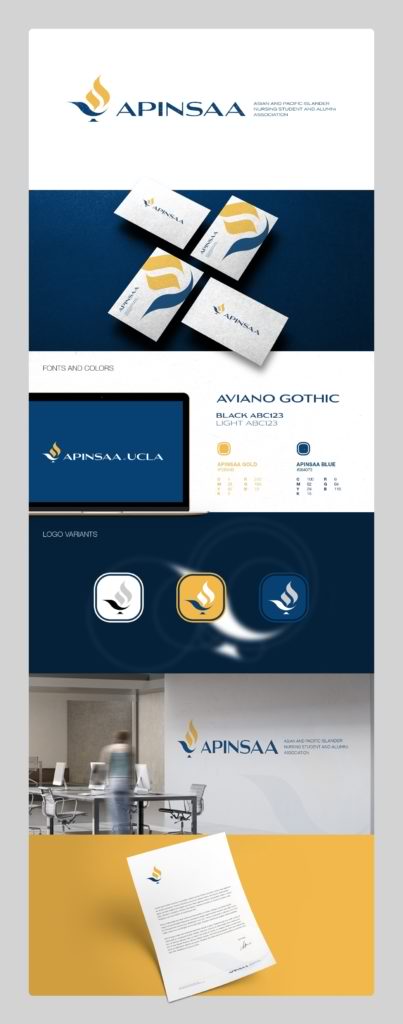
When creating a logo design and branding collaterals, understanding the purpose and the vision of the client is key. With APINSAA, we were able to create a unique logo design that shows who they are as well as the core vision and mission of their organization.
Do you need a new logo and brand design for your company or organization?
Our Creative design team specializes in creating professional logo designing and branding collaterals that leave a lasting impression. If you are in need of designers with exceptional design skills, KDCI is the creative and graphic design outsourcing company for you.
Let us build you an expert team of designers to take your brand to the next level. With us building you a custom team of vetted, expert designers on board, you are always guaranteed top-notch, professional logo and branding design services every time.
To learn more about what KDCI has to offer, contact us today.

At KDCI, we like to encourage our team members to let out their inner geeks. From talking about the latest comic releases over at the office pantry to displaying memorabilia of their favorite franchise around the office, our employees are free to express their interests over fandoms they’re part of. Some of our team's biggest geeks? Our graphics and creative design team leaders.
That is why for our president's birthday, we came up with an awesome idea for a gift that would show off his love for videogames, and show off our team's incredible freehand drawing skills at the same time.



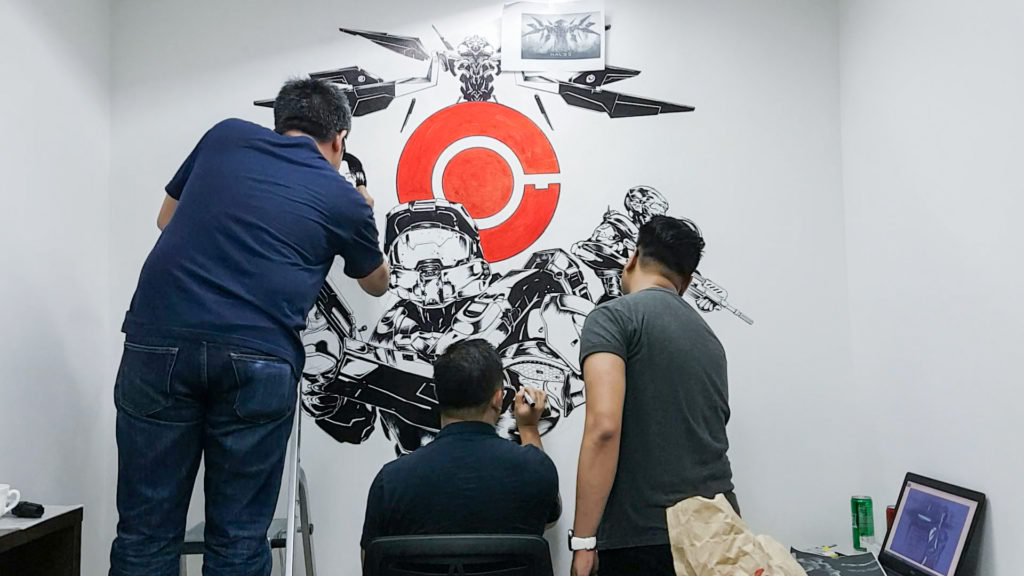
Now with this amazing piece of sci-fi art on the wall, our president's office feels out of this world. Any sign of Master Chief? Well, he’s right in the office - an awesome view for any Halo enthusiast.
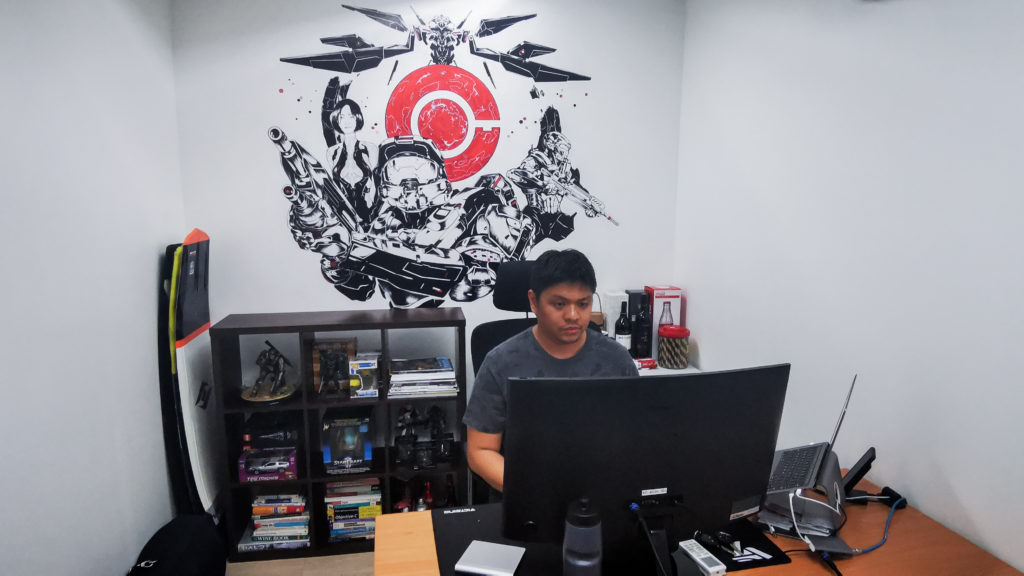
Like our president, the KDCI team enjoys geeking out on a number of franchises such as Marvel, Game of Thrones, and Star Wars. After all, the KDCI team has the precise timeliness of a robot, the out-of-this-world creativity of an alien, and the heart and soul of a human. Our employees are kings and queens who provide service to the people, our clients. From welcoming you on an Iron Throne to discussing company strategies alongside Darth Vader, as long as you have the talent and interest to be part of our team, you’re sure to fit right in.
So we ask you, are you ready?

For decades, many global companies have taken advantage of outsourcing. Whether it’s to save time, keep labor costs down, or move production processes abroad, outsourcing makes it possible for businesses to grow steadily while maintaining a high level of productivity and operational efficiency.
While outsourcing has been a successful strategy for many companies, others have struggled to reap its benefits, often with undesired results.
So, what are the things you need to consider before outsourcing business operations? To help you get started, here are 10 outsourcing tips to remember:
Not all services across all industries can be outsourced. Therefore, understanding how your business works is crucial. You will need to know which second-hand processes can be delegated to third parties and which ones should be retained in-house. Here are the most commonly outsourced departments and functions:
After identifying which processes can be turned over, the next step is to plan your outsourcing strategy. This includes careful planning and allocation of available resources, as well as assessing costs, risks, and long-term benefits. You will also need to identify reliable suppliers and vendors to ensure the success of your strategy.
Speaking of action plans, creating (and sticking to) a budget is one thing you must not forget when outsourcing business operations. To financially prepare your company for outsourcing, keep in mind these three tips:
For example, if you’re outsourcing graphic design, the annual cost of hiring a Filipino graphic designer at the junior level is $6,269.59 USD a year, whereas a senior graphic designer costs $12,662.63 USD. Some cities pay more, so be sure to factor in location-based salary differences in your budget.
As a business owner, you need to be one step ahead of everything, including costs. Developing a budget allows you to assess the potential financial benefits and risks of outsourcing.
No, we don’t mean choosing the cheapest or the most expensive offshore outsourcing companies. When evaluating potential outsourcing partners, you also need to consider these factors:
Furthermore, consider working with an offshore outsourcing company that’s already proficient in your tools and software. For instance, if your finance and accounting department is using Wave Accounting, you’ll get more value from outsourcing accounting with an external provider that knows the said program inside and out.
Thoroughly vetting external providers may take time, but you’ll be rewarded with a partnership that aligns with your standards, goals, values, and expertise.
Outsourcing your processes to an outsourced service provider won’t always go smoothly the first time. To effectively manage risks, you have to start small so you can easily keep tabs on everything. By doing so, you can objectively assess if your offshore processes are being done efficiently and effectively.
No matter how many client testimonials, case studies, and reviews you’ve read, it’s normal to feel uncertain about whether your outsourcing provider is truly the right fit for your business. Fortunately, most outsourcing companies accept trial periods or projects.
Much like a test task for employees, trial periods or projects let you see if your potential outsourcing partner can deliver on their promises with real results. Marketing claims can be deceiving, so a trial period takes off any rose-tinted view you may have of the company.
It also helps you pinpoint challenges, address any shortcomings, and make an informed decision before fully committing to the BPO provider.
After you have formed a team of online workers, the next step is to get them onboarded and up to speed with your company culture. Everybody must be fully aware of their roles, including the results they have to deliver. This is done to avoid miscommunication, which can result in productivity issues and high turnover rates.
If onboarding is all about making new employees feel that they’re an important part of the company, training, on the other hand, focuses more on the technical aspects of the job. It’s important to invest in training so that your team is fully equipped before they do their job. As a result, they will be able to deliver their output quickly and easily.
Communication is the foundation of effective outsourcing. Here’s what to do when onboarding offshore employees:
By regularly communicating with your outsourced team, you can strengthen teamwork, address issues, and maintain optimal momentum on projects.
There’s a reason why outsourcing partners market their teams as a “seamless extension” of in-house teams. In a nutshell, offshore employees are assets — not extra task-takers or disposable staff. But just like your in-house employees, outsourced staff need to be treated right, too.
Here’s how to value and respect your offshore team:
There are a plethora of outsourcing companies that can help your business flourish. If you need support in building an outsourced team, we recommend partnering with KDCI Outsourcing, a Pasig City-based BPO company.
We offer offshore staffing services for businesses that need specialized, cost-effective expertise, scalable solutions, and unparalleled operational efficiency. We have a diverse pool of outsourced employees in the fields of accounting and finance, customer service, property management, human resources, and more.
Our outsourcing services promise not just cost savings, but also faster turnaround times, higher revenue, enhanced customer experience, and stronger brand reputation.
Get ready to experience these benefits first-hand with KDCI Outsourcing. Get in touch with us ASAP, so we can design a customized outsourcing strategy just for you!

The proliferation of the internet and the cost-effectiveness of overseas labor have made outsourcing an indispensable tool for entrepreneurs seeking rapid growth. While plenty of commercial establishments have enjoyed great success with this strategy, not all businesses equally benefit from it.
If you have finally decided that outsourcing is the right approach for your company, you need to be aware of the common outsourcing mistakes that business owners make. Here are the top 10 blunders for you to remember and avoid:
There are many entrepreneurs who jump on the bandwagon of outsourcing without fully understanding its potential impacts on their company. While it has many benefits — such as improved flexibility, lower labor costs, and expanded capacity — outsourcing also brings some operational challenges if inefficiently used.
There are crucial questions that you need to think through:
It is important to plan ahead and look at how outsourcing will impact all the other aspects of your business. Remember, managing external resources requires a different skill set than handling the same assets internally. Therefore, you should be as careful and as thorough as possible during the decision-making stage.
An outsourcing contract is an important legal document when entering into a partnership with an outsourcing provider. One common outsourcing mistake to avoid is writing vague (or overly complex) contract clauses, as they can cause conflicts of interest between you and the outsourcing firm. Essentially, the point of a contract is clarity and mutual agreement.
When crafting clauses, use clear and simple language. If possible, consult a legal professional. Likewise, don’t hesitate to ask for clarifications if any of the clauses outlined in the service provider’s contract are unclear to you.
Outsourcing helps organizations save between 15% to 30% of costs, according to the International Association of Outsourcing Professionals (IAOP), cited by MyOutDesk. Most outsourcing providers even claim that their services can reduce your labor costs by 70%.
However, don’t let the appeal of cost savings blind you from the real (and hidden) costs of outsourcing. Without a realistic budget or a clear financial plan, outsourcing can become an expense-heavy investment.
If you’re outsourcing accounting services to a Philippine-based accounting outsourcing provider, research the average salary of a Filipino accountant so you have an estimated benchmark of their labor costs. Implementation fees, service costs, management fees, pricing model, and technology may also influence outsourcing costs.
By preparing financially, you can anticipate expenses and choose an outsourcing service provider that aligns with your budget and outsourcing needs.
One of the biggest outsourcing mistakes you can make is settling for the cheapest outsourcing company and overlooking its service quality and expertise. Rather than saving on costs and maximizing your outsourcing ROI, you’ll end up becoming frustrated and spending more on early termination fees due to unmet expectations, mismatched goals and values, and poor output quality.
According to Computer Economics, cited by Auxis, distance (3.7), data residency (3.2), and language (3.0) are the top factors to consider when selecting a service provider to work with. However, time zone overlap and low outsourcing costs are only ranked 2.9 and 2.2, respectively.
The trick? Widen your options and always prioritize best-fit outsourcing providers. Evaluate potential outsourcing partners based on their ability to secure your data, scale your business, deliver high-quality services, and meet your goals and expectations.
Outsourcing is a great opportunity to work with people of different nationalities and promote DEI (diversity, equity, and inclusivity). However, cultural differences become a problem if you do not do your research or neglect them as a deciding factor when vetting outsourcing providers.
If you’re outsourcing work to the Philippines, you might know the country for its colonial history, hospitality, resilience, and affinity with Western culture. However, there are still distinct cultural differences between the Philippines and the West.
For example, Filipino culture is more hierarchical. Rather than addressing their superiors by their first names, Filipino employees use “ma’am” or “sir” followed by the person’s name. They’re also non-confrontational and conflict-averse, so Filipinos may choose to keep the peace rather than engage in disagreements.
By reading up on Filipino culture (or any culture of your chosen outsourcing country), you already have an idea of your outsourced team’s behavior towards conflict, disagreements, and even feedback. We also recommend creating a safe space for your outsourced team to contribute their ideas and assert themselves during meetings.
For many outsourced businesses, it is easy to make small mistakes that might result in problems that will snowball into something more serious if left unchecked. Sometimes, such issues come about because of miscommunication.
If you are sharing a project brief with your outsourcing partner, do not make the mistake of omitting pieces of information because you assume that they are obvious. It may be challenging to discuss each small detail of a project; that is why constant communication and cross-checking with people involved is crucial.
Make sure the project scope is properly understood, and that everyone knows what they are supposed to do. The rule of thumb is to regularly communicate with your outsourced staff to avoid missing seemingly obvious but important details.
After going through the list of qualified outsourcing companies, you must identify key outcomes that you are targeting from a specific project. The expectations should be clear, and milestones have to be identified in advance to ensure smooth operation.
During the planning phase, you can then involve your chosen outsourced company to set proper expectations.
Not requesting a trial period (or project) is risky, as you won’t be able to assess your outsourced team’s output and responsiveness and detect red flags early on. This period helps you avoid entering into a lock-in contract or paying a termination fee with the wrong or ill-fit outsourcing service provider.
Before signing a contract, request a trial period from the provider, so you can sign the contract with full confidence once the trial ends.
With 600 million cyber attacks occurring on a daily basis, data protection should always be a priority when outsourcing. Outsourcing providers may have the most enterprise-grade IT facilities, but here’s the million-dollar question: How well do they protect your data from cyber threats?
If you’re engaging in finance, healthcare, or human resources outsourcing, having your data fall into the wrong hands can lead to a breach of customer trust and reputational loss.
One of the most common outsourcing mistakes clients make is failing to assess the service provider’s cybersecurity capabilities. Ask questions about the company’s cybersecurity program, data encryption and storage solutions, and risk management strategies. These questions will help gain insights into its commitment to data privacy and confidentiality.
While outsourcing involves a degree of security risk, choosing the right service provider will give you peace of mind.
One aspect of outsourcing that clients should never ignore is employee treatment. Your outsourced staff members may be from another country with a culture different from yours, but they’re also real humans with feelings and emotions. Outsourcing is inherently collaborative, and outsourced teams are extensions of your internal team —and thus — should be treated like your own.
How do you treat your outsourced employees? Cultivate a culture of mutual trust and respect. Avoid making racist remarks or discriminating against your outsourced team against your internal staff during cross-team meetings. Take note: cultural awareness and sensitivity go a long way in ensuring a successful partnership.
As a premier outsourcing company with over 10 years of experience in the business process outsourcing (BPO) industry, KDCI Outsourcing offers next-generation offshore staffing solutions for creative production, content creation, marketing, retail and e-commerce, and many more.
At KDCI Outsourcing, we pride ourselves on our ability to seamlessly integrate our offshore outsourcing teams with our clients’ in-house teams and provide top-notch services for businesses of all sizes.
Let us start building your team of experts to help streamline your workflow and send your business into hypergrowth. Contact us today and start outsourcing to the Philippines!


What started out as a few agents, has grown into an invaluable partnership with KDCI. With more than 40 team members, we are lucky enough to count as part of our Cedar Family. Thank you so much KDCI for making our Company better!

We have found KDCI to be a consistently reliable partner, always willing to ‘go the extra mile’ to ensure our valued customers receive the best possible service.

KDCI plays a very important role in our catalog and content operations. They are responsive, kind, and always willing to help us as much as possible. We have been working together for more than 4 years, and we hope our partnership will be even more fruitful in the future.

Having collaborated with KDCI.co for our creative needs, I can confidently attest to their unparalleled expertise and dedication. Their team consistently delivered innovative solutions that not only met, but often exceeded our expectations. Their professionalism and attention to detail are commendable.

KDCI were able to grow with us with any future requirements. We have a lot to do when it comes to our business, and everytime we come back, they're right there with us and able to deliver.

KDCI's team has been instrumental in helping us not only modernize our platforms but also increase the experiences for the customer, and to deliver on the tsunami of content that came their way.

We had a lot of difficulty finding qualified talent in the United States. Honestly, I don't think we had thought about outsourcing at all as a potential option, but we were very open to it once we heard about it. We love our KDCI team. They're just like a regular part of our team, it's just that they're thousands of miles away.

It's been five years since we started working with KDCI, and it just keeps getting better and better. We've grown together and achieved a lot of shared success. Overall, they're incredibly professional yet fun to work with. We are incredibly happy to have found them.

We're so glad we partnered with KDCI to develop a unique platform that delivers personalized customer experiences without compromising functionality or security. It was an amazing experience, I won't hesitate to start another project with them again.