Thank you! Your submission has been received!
Oops! Something went wrong while submitting the form.
Thank you! Your submission has been received!
Oops! Something went wrong while submitting the form.


.jpg)
Outsourcing customer service to the Philippines has evolved from a cost-saving tactic into a strategic growth move for some of the world’s biggest brands. As global markets become more competitive and customer expectations rise, companies in the U.S., Europe, and Australia are turning to the Philippines to deliver fast, reliable, and human-centered support. In 2026, the country continues to lead the global outsourcing landscape with its world-class talent, cultural compatibility, tech-enabled operations, and strong government backing — making it the go-to destination for businesses that want to elevate customer experience without scaling costs.
This complete guide breaks down everything you need to know about outsourcing customer service to the Philippines in 2026 — from the advantages and challenges to pricing, outsourcing models, industry examples, and how to choose the right partner. Whether you're a startup looking for flexible support, an enterprise scaling your CX operations, or an e-commerce brand preparing for peak season, this guide will help you make informed, future-ready decisions and build a customer service strategy that drives results.
The Philippines continues to dominate the global customer service outsourcing landscape, with the industry reaching new milestones in 2026. According to the IT & Business Process Association of the Philippines (IBPAP), the country’s IT-BPM sector is projected to surpass $40 billion in annual revenue and employ over 2 million Filipinos, solidifying its position as a world leader in customer experience (CX) delivery. Statista reports that the Philippines consistently holds one of the largest market shares in the global contact center industry, serving the U.S., UK, Australia, and major European markets.
Post-pandemic digital transformation has further fueled this growth. As companies embraced hybrid work, scalable CX operations, and 24/7 customer demand, global brands increasingly relied on offshore teams in the Philippines to fill talent shortages and upgrade customer service performance. With strong infrastructure, well-trained CX professionals, and seamless multichannel support capabilities, the Philippines remains the preferred destination for businesses prioritizing high-quality, human-centered customer experience at scale.
One of the strongest advantages of outsourcing to the Philippines is the country’s exceptional English proficiency. The nation consistently ranks among the top English-speaking countries in Asia, with a neutral accent and excellent comprehension skills. This linguistic strength is complemented by the Philippines’ deep cultural alignment with Western countries, shaped by decades of cultural exchange, media influence, and educational systems modeled after the U.S.
Filipino customer service agents are globally recognized for their empathy, patience, professionalism, and service oriented mindset, traits that significantly improve customer satisfaction and brand loyalty. Their natural ability to communicate warmly and authentically makes interactions feel more personal and human, which is why many international brands prefer Filipino CX teams over automated support or nearshore alternatives. This consistent cultural compatibility remains a major driver behind the Philippines’ long-standing reputation as the world’s customer service capital.
The Philippine government has played a crucial role in sustaining the country’s leadership in the global outsourcing industry. Through agencies like the Board of Investments (BOI) and Philippine Economic Zone Authority (PEZA), businesses enjoy tax incentives, simplified regulatory processes, and access to IT-enabled economic zones designed specifically for BPO and IT-BPM growth. These economic zones offer world-class infrastructure, business continuity support, and state of the art facilities that enable seamless global operations.
In addition, the government and IBPAP continuously invest in training, upskilling, and digital enablement programs to enhance workforce readiness. Nationwide initiatives focus on AI literacy, advanced customer service training, cybersecurity preparedness, and technical skills development, ensuring the Philippine talent pool remains competitive in a rapidly evolving CX landscape. This strong government industry alignment ensures that the Philippines not only maintains its position as a top outsourcing destination but continues raising global standards in customer experience excellence.
One of the most compelling advantages of outsourcing customer service to the Philippines is significant cost savings without sacrificing service quality. According to industry sources, businesses can realize up to 70% labor cost savings by moving support operations offshore to the Philippines compared to U.S.-based operations.
Beyond labor costs, outsourcing to the Philippines reduces overhead related to office space, infrastructure investment, recruitment, and training. Lower commercial real estate costs, streamlined staffing models, and efficient workforce deployment free up internal budgets and enable companies to reinvest in strategic growth, product innovation, or enhanced customer experience initiatives.
The Philippines is home to a deep and growing talent pool, professionals trained in customer service, technical support, e-commerce operations, and omnichannel engagement. This makes it possible for businesses to ramp up teams quickly and scale flexibly to meet demand spikes, seasonal peaks or growth phases. For example, BPO industry forecasts indicate an 8-10% annual growth rate in staffing from LCC destinations such as the Philippines.
This combination of trained talent and scalability means companies outsourcing to the Philippines can assemble dedicated teams fast, align them with brand culture, and adjust team size as business needs fluctuate without the long hiring cycles or overhead of an in-house expansion.
Businesses that serve the U.S., Europe, Asia-Pacific, or global audiences benefit immensely from offshore support in the Philippines. Filipino teams operate across shifts and provide 24/7 support, enabling a true “follow-the-sun” model. This ensures faster responses, globally distributed coverage, and greater customer satisfaction. According to industry commentary, offshore locations such as the Philippines are increasingly chosen for their ability to deliver near-constant operations and multilingual support.
The time-zone alignment allows for U.S. businesses to tap into trained Filipino support teams during U.S. off-hours, facilitating seamless handoffs and continuity in service. This international coverage helps brands stay responsive, maintain SLAs, and compete on customer experience not just cost.
Outsourcing customer service to the Philippines works across a wide span of industries from e-commerce, fintech, healthcare, SaaS, telecommunications to retail. As one review of Philippine CX outsourcing notes, “more than 70% of companies now use AI to assist customer interactions” and operational outsourcing growth remains robust in high-demand verticals.
Moreover, customer experience research shows that 89% of consumers are more likely to make another purchase after a positive service interaction, demonstrating why investment in customer support matters. By enabling brands to serve global clients with scale, reliability and empathy, outsourcing in the Philippines becomes more than cost-saving, it becomes a strategic enabler for growth, loyalty, and brand differentiation.
While the Philippines is known for its strong English proficiency and cultural alignment with Western markets, communication barriers can still arise, especially in highly technical or industry-specific interactions. To minimize this, businesses should invest in structured onboarding, share detailed brand guidelines, and conduct cross-cultural communication training. Philippine BPOs typically offer accent neutralization, empathy training, and product certification programs to ensure agents fully understand the client’s tone, values, and service expectations. When both sides collaborate closely during training, organizations can bridge cultural nuances and deliver a seamless customer experience.
Data protection is one of the most critical considerations when outsourcing customer service. Leading Philippine BPOs adhere to global data security standards such as GDPR, HIPAA, SOC 2, and PCI-DSS, ensuring safe handling of sensitive customer information. Many outsourcing providers also invest in advanced cybersecurity measures multi-factor authentication, access control policies, end-to-end encryption, and secure cloud environments, to safeguard client data. Regular audits, compliance certifications, and dedicated data protection officers ensure continuous monitoring and alignment with international regulations, giving companies peace of mind while operating offshore.
Maintaining high service quality requires clear performance frameworks and ongoing evaluation. Companies outsourcing to the Philippines benefit from implementing KPIs and SLAs such as First Call Resolution (FCR), Customer Satisfaction (CSAT), Average Handle Time (AHT), and response time benchmarks. Top BPO partners also use quality assurance teams, calibration sessions, and real time dashboards to monitor performance and identify improvement areas. Continuous feedback loops, coaching sessions, and upskilling programs ensure that teams stay aligned with brand expectations and adapt quickly to evolving customer needs. With the right performance management structure, businesses can achieve consistent, high-quality service, regardless of location.
The dedicated team model offers companies a full-time, offshore team that looks and acts like an extension of their own in-house department, ideal for brands that require consistent, high-touch customer support aligned closely with their values and workflows. According to industry research, 92% of Forbes Global 2000 companies engage in outsourcing, many using dedicated team models to retain control and accelerate growth. Companies choose this model when they want stability, high alignment, and scalability without the overhead of building internally. It’s particularly well suited for premium brands or enterprises with complex support requirements.
The shared service model is a cost-effective option where multiple clients share a vendor’s pooled team, making it a good fit for small and mid-sized businesses. Services are delivered across clients, reducing cost per head while still leveraging professional infrastructure. According to Outsourced.ph, the global outsourcing industry reached USD 92.5 billion in 2024, reflecting broad adoption of shared and dedicated service models. Gartner’s framework for shared services describes how organizations standardize and centralize processes in low cost locations to achieve economies of scale and customer value improvements. This model offers flexibility and affordability, though it typically involves less exclusivity and full-time control than a dedicated team.
The hybrid (co-managed) model blends the strengths of in-house teams with outsourced support, giving companies both control and scalability. For example, internal staff may manage core customer support strategy and brand voice, while an offshore partner handles high volume or after hours operations. While recent data specific to hybrid CX outsourcing models is limited, broader outsourcing trends show that companies are shifting toward more strategic outsourcing arrangements, moving beyond transactional cost cutting to value creation and strategic growth. The Deloitte and Gartner surveys highlight this trend of outsourcing evolving into a growth enabler rather than merely a cost reducer. With a hybrid model, businesses can retain brand sensitive control while leveraging external expertise to scale faster and mitigate risk.
Not all outsourcing providers offer the same strengths, so evaluating industry expertise is one of the most critical steps in choosing the right partner. Look for companies with a strong portfolio in your niche, whether you’re in e-commerce, SaaS, fintech, healthcare, retail, or telecommunications. Review their case studies, success stories, and client testimonials to understand how they’ve handled challenges similar to yours. A vendor with proven experience already understands your industry’s compliance requirements, customer expectations, and operational workflows making onboarding faster and outcomes stronger.
A modern customer service operation relies heavily on technology, so your outsourcing partner must be equipped with enterprise-grade tools and infrastructure. Evaluate their capabilities in:
In 2025 and beyond, leading Philippine BPOs invest heavily in AI-assisted workflows, speech analytics, and secure cloud environments, ensuring faster, more accurate, and compliant customer service delivery.
Customer service quality depends largely on the people delivering it, so a partner’s internal culture matters. High employee engagement translates directly into higher quality conversations, lower churn, and better customer satisfaction. Research shows that companies with strong employee engagement produce up to 23% higher profitability. Look for indicators like:
A provider that invests in its team creates a happier, more stable workforce, resulting in consistently excellent CX for your customers.
Outsourcing should feel like an extension of your business, not an outsourced transaction. This means your partner should prioritize clear communication, transparency, and structured collaboration. Key elements to look for include:
A partner committed to transparency ensures you always have visibility into team performance, operational health, and customer satisfaction, building a long-term outsourcing relationship grounded in trust and accountability.
Outsourcing your customer service operations to the Philippines offers significant savings, especially when compared to U.S. on-shore rates. A few benchmarks:
This cost differential gives companies opportunity to redirect savings into training, quality improvement, or expansion of support coverage.
While base wages in the Philippines are generally lower, several variables influence the total outsourcing cost:
Understanding these factors helps you build a realistic budget and avoid unforeseen cost escalation when scaling offshore.
Outsourcing to the Philippines isn’t just about reducing cost, it’s about delivering greater value and operational flexibility while maintaining service standards.
In short: the equation isn’t purely “lower cost” it’s “higher value, greater flexibility, and sustainable growth.” When balance is achieved, outsourcing customer service to the Philippines becomes a strategic enabler, not just a cost-reduction tactic.
KDCI Outsourcing builds fully customized offshore teams in the Philippines designed around your industry, workflows, and long-term goals. Whether you need a dedicated customer service team, technical support specialists, IT and software development staff, graphic designers, content creators, or e-commerce operations experts, KDCI recruits and trains professionals who align with your brand’s expectations. Every team is set up as an extension of your internal operations, mirroring your processes, KPIs, and communication style to ensure seamless integration and consistent customer experience delivery.
As your business grows, your offshore team should grow with you. KDCI offers scalable staffing models that allow you to expand or adjust your team quickly, without the delays or costs associated with traditional hiring. Our operations are built on rigorous compliance frameworks, following global standards such as GDPR, HIPAA (for healthcare-related functions), PCI-DSS (for financial transactions), and SOC-aligned security protocols. With secure infrastructure, advanced data protection systems, and structured onboarding processes, we ensure your offshore team is not only productive but also safe, compliant, and aligned with regulatory requirements in the U.S., Canada, Australia, and beyond.
KDCI doesn’t simply provide staff, we build long-term partnerships that fuel your company’s growth. We support global organizations across industries in their efforts to outsource customer service and sales, outsource software development and IT services, outsource creative and graphic design, outsource e-commerce operations, and more. From talent recruitment and onboarding to performance management, QA monitoring, and continuous optimization, KDCI handles the entire outsourcing lifecycle so you can stay focused on strategy, innovation, and customer success. With us, your offshore team becomes a powerful engine that drives efficiency, scalability, and sustainable growth.
Outsourcing customer service to the Philippines has evolved into one of the most strategic decisions global companies can make in 2026. With its world-class talent, cost efficiency, cultural compatibility, and mature BPO ecosystem, the Philippines offers a unique blend of value and quality that few markets can match. Businesses across e-commerce, SaaS, fintech, retail, healthcare, and technology continue to leverage Philippine-based teams not just to reduce costs, but to significantly improve customer experience, operational stability, and international reach.
But the true benefits of outsourcing come from choosing the right partner, one that understands your business, invests in your success, and builds teams that feel like an extension of your own. KDCI Outsourcing delivers exactly that. With customized offshore teams, scalable solutions, and end-to-end operational support, we help companies unlock growth, efficiency, and long-term resilience through world-class talent in the Philippines.

.jpg)
Other than being actively present on social media sites, other companies neglect what email marketing can actually benefit their advertising efforts and company. Email marketing is an excellent way of promoting products, services and events to customers, business prospects, members and suppliers who have explicitly requested to receive such messages. Recipient responses to email marketing messages can be measured through open-up and click-through tracking, which can be further extended to measure actual sales or membership conversions. Based on real data, companies and organizations can make more informed decisions in tailoring future announcements to more closely match the needs and preferences of subscribers. When conducting email marketing campaigns, it is important to use full-featured email marketing design and software. The software should provide double opt-in functions and an easy-to-use interface for people to just automatically subscribe, unsubscribe and change their email addresses or subscription settings if needed. Naturally, the software should also automatically handle bounces or delivery errors and provide in-depth tracking and reporting capabilities to measure the effectiveness of campaigns. This allows organizations to build loyalty and trust through a more personal relationship towards their subscribers.
Opt-in email marketing is an ideal way of promoting products, services and events to customers, business prospects, members or suppliers who have explicitly requested to receive such email messages. Some may not even realize the benefits of choosing this marketing strategy. So here are the top reasons you need to know.
Email marketing can reach a wide audience in a short period of time and allows recipients to immediately act on messages. Campaigns can be implemented and executed with only minimal software, hardware and personnel investments.
Email marketing is much more cost-effective than traditional direct mail marketing, banner ads or telemarketing where additional fees are incurred. Email marketing allows links to be embedded in messages, which drives website traffic as well.
Regularly delivered email messages with proper subject lines and logos reinforce company and product awareness. Email creates an interactive connection and nurtures quality customer relations.
Email marketing and sales campaigns can be measured in detail through open-up, click-through and conversion rates to evaluate the success of campaigns. The data allows marketers to adjust strategies to improve future results.
Using a customer database, email marketing campaigns can be customized with specific customer data. Databases also allow targeted mailings to specific recipient groups, for example, by ZIP code, gender or income. Moreover, you can also highly customize your emails to reflect your brand and design. If you think email marketing will serve you best and need a helping hand in its creation, talk to us at KDCI Outsourcing and learn how we could help you!
Even the most carefully planned email marketing campaigns can underperform when simple mistakes slip through. Avoiding these pitfalls helps strengthen your overall digital marketing strategy and ensures higher engagement and customer loyalty.
Sending the same promotional email to your entire email list weakens engagement and can trigger spam complaints. A successful email marketing campaign relies on targeted messages that speak directly to a potential customer’s needs, interests, and behavior. Use email automation and email marketing platforms to segment subscribers based on demographics, past purchases, and engagement levels. This improves customer relationship quality and increases the relevance of every email.
A personalized email goes beyond adding a subscriber’s name. It adapts email content based on customer actions, such as welcome emails for new subscribers or cart emails for shoppers who abandoned their carts. Marketers who fail to personalize miss out on major email marketing advantages, especially higher open rates and deeper customer engagement. Personalization strengthens trust and encourages an existing customer to become a loyal customer.
Cluttered layouts, broken links, and non-responsive email templates can harm your email marketing efforts. Since email is a key marketing channel, it must look polished on mobile and desktop. A simple, clean design helps subscribers focus on your message. Strong visuals, readable fonts, and clear CTAs lead to more successful email marketing campaigns.
Email marketing campaigns require consistency. Sending too many emails overwhelms your audience, but sending too few causes them to forget your brand. Both extremes weaken engagement emails and reduce your campaign’s impact. Establish a balanced schedule that aligns with your broader digital marketing and content marketing strategies.
Skipping tests is one of the most common mistakes in any marketing campaign. Always test subject lines, links, images, and formatting before sending. A quick check prevents broken layouts, spam triggers, and confusing wording. Proper testing ensures every subscriber receives a smooth experience.
Email works best when it collaborates with your other marketing channels. Integrating your email marketing strategy with social media, content marketing, and marketing automation tools creates a seamless experience that boosts conversions and strengthens customer relationships.
Social media marketing and email thrive when used together. Promote your email list through your social media accounts to attract more email subscribers. Likewise, use email to drive traffic toward social media campaigns, new product announcements, or contests. This creates a cycle of engagement where each channel supports the other. The result is a more unified digital marketing approach that keeps both new and existing customers connected.
Marketing automation tools allow you to send targeted emails based on customer behavior. This includes welcome emails, engagement emails, cart emails, and other automated responses. Email automation ensures that every campaign feels timely and personal, increasing the chances of converting a potential customer into a buyer. This integration improves efficiency and maximizes every email marketing benefit.
Email is a powerful distribution tool for content marketing. Share blog posts, guides, videos, and other resources directly with subscribers as part of your email marketing campaign. This positions your brand as a helpful resource and keeps your audience returning for more. When your campaign and content strategy work together, customer engagement naturally increases.
A unified brand voice strengthens trust and recognition. Ensure your email templates, social media posts, and website content all share the same visual identity and tone. This consistency helps subscribers quickly connect the dots between each marketing channel, which enhances the overall experience of your digital marketing strategy.
Track how different channels influence email sign-ups, purchases, and engagement. For example, determine whether a new subscriber joined from social media or downloaded a content piece. Using combined metrics helps marketers refine their strategies and understand which channels work best together. This results in smarter email marketing campaigns and more efficient marketing efforts overall.
Founded in 2011, KDCI Outsourcing is on a mission to empower brands worldwide by building teams with highly-skilled employees from the Philippines that bring results.
Established by seasoned executives with over 20 years of experience developing businesses for success, we empower professionals in the fields of creative design, customer service, back office support, web development, and many more to streamline time consuming processes and repetitive tasks allowing you to focus on wins in your business.
.jpg)
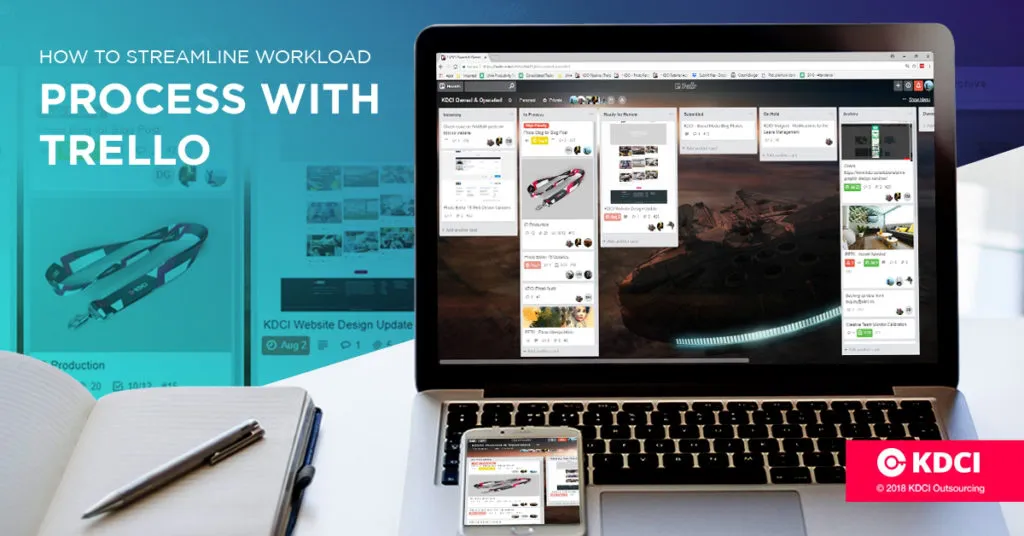
In the modern business landscape — where teams work remotely and collaboration is an absolute must — efficient project management is key to ongoing success. With 22% of the American workforce (that’s nearly 33 million employees) working remotely, using actual vision boards for project management and collaboration is not always an option.
Thankfully, there are other tools that your team can use for managing projects, even and especially when you have team members who are across the globe.
Whether you’re planning for an extravagant company event or your usual client meeting, there is a simple tool you can rely on to help you get your projects off the ground. Trello is a simple and easy to use tool that can provide you with all the organization capabilities of a planner while having the flexibility of a virtual corkboard.
With over 25 million users worldwide, it’s one of the most popular productivity and project management applications on the market today, and there’s no surprise why.
In this comprehensive guide, we’ll give you a rundown of the benefits and use cases of the project management software Trello. We’ll explore how you can utilize the tool and maximize Trello for effective project management and better overall workflow.
Trello is a visual project management and collaboration platform designed to help teams organize work, coordinate responsibilities, and track progress in a clear, intuitive way. It is built around the concept of digital boards that represent projects or workflows, making it easy to see what needs to be done, who is working on what, and how tasks are progressing at any given moment.
Unlike traditional project management tools that can feel rigid or complicated, Trello emphasizes flexibility and simplicity with its advanced features. Teams can structure Trello boards to match their existing workflows, be it for project development, campaign planning, operations oversight, recruitment pipelines, or client service delivery. Because of this adaptability, Trello works equally well for small task groups and large cross-functional departments.
At its core, Trello consists of three main components:
This visual structure allows teams to grasp project status at a glance. Instead of digging through emails, searching through chat history, or asking repeatedly for updates, everyone can see where work stands simply by opening the board. All it takes is one Trello account, and you can utilize this project management tool for either a personal project, future projects, or monitoring task status on your existing workflows.
Much like other project management tools and kanban boards, Trello can be used to:
And because Trello works in real-time, updates happen instantly — meaning decisions are faster, bottlenecks are easier to catch, and projects stay on track without constant check-ins or status meetings.
By using Trello, you can quickly and easily plot daily and monthly tasks. You also have the option to create boards and checklists which can be shared with your entire team for collaborative work. At a glance, you can even see the progress you’ve made and all the tasks you have left. Here are some of the key reasons why Trello is ideal for managing the end-to-end project management process:
Trello gives teams a shared, real-time view of every task and project stage. Instead of relying on scattered updates, email threads, or repeated follow-ups, progress is visible on the board at a glance. This makes it easier for leaders to monitor timelines and for team members to understand priorities without needing constant clarification.
Each task in Trello can be assigned to specific team members, complete with deadlines, checklists, and attached files. This eliminates confusion over “who’s doing what,” helps prevent duplicated work, and promotes personal accountability throughout the workflow.
Unlike rigid project management platforms, Trello adapts to the processes your organization already follows. Whether you follow agile methods, structured approval flows, or continuous operational cycles, you can design Trello boards that reflect those exact workflows. The system works with (and for) you — not against you.
Trello can support small teams working on focused tasks or entire departments coordinating multiple projects at once. As organizations expand, Trello remains easy to structure, replicate, and scale across teams. Boards can be grouped by department, role, or project type to maintain clarity even at higher volume.
Since all task details, discussions, and updates live on each card, Trello minimizes the need for back-and-forth emails, status meetings, and chat threads. Team members know exactly where to look for information, and stakeholders can track progress across complex projects without interrupting the workflow.
Trello does not need to replace tools your organization already uses. It integrates smoothly with communication platforms like Slack and Microsoft Teams, document suites like Google Workspace and Office 365, and workflow systems like Jira, HubSpot, or Salesforce. This makes Trello a central hub that ties your systems together rather than adding another layer of complexity.
Because Trello is visual, accessible, and easy to understand, it becomes a shared platform where cross-functional teams can align work even if they use different methods or tools. This helps maintain consistency and transparency, especially when a project manager works on different projects, in distributed or hybrid work environments.
Using Trello effectively starts with understanding how its core components — boards, lists, and cards — work together to create a visual workflow. Once these building blocks are clear, you can tailor Trello to match any project style, from creative production to operations and enterprise resource planning.
Here's a complete guide to utilizing Trello features:
For larger organizations, boards are often created at:
A board represents your overall project or process. This could be something broad, like Marketing Campaigns, or something specific, like Q4 Product Launch. The board serves as your central workspace for task management where the team can view everything related to the project.
Lists are used to represent phases of work. Most teams begin with a simple workflow such as:
However, Trello allows you to build lists based on your actual processes, not someone else’s template. For example:
The structure is flexible — Trello adapts to your workflow and fosters team collaboration, not the other way around.
Each task in Trello is represented by a card. Cards contain the actual work items that move across the workflow. Inside a task card, teams can add:
This turns every work item into a structured, trackable individual task with all its context stored in a single place.
Effective project management requires clarity in ownership. By assigning members to cards and setting deadlines, Trello helps ensure visibility that helps prevent delays and miscommunication across teams, especially in situations with multiple stakeholders.
As progress happens, tasks are moved left to right across the board — from planning to execution to completion. This creates an always-updated, visual status tracker.
Managers can check the board and track progress at any moment and immediately understand:
This eliminates the need for repeated status calls and update meetings.
Labels in Trello project management allow teams to categorize tasks by:
In high-volume boards, labels help teams filter and focus on what matters most.
Trello’s built-in automation system — the Butler feature — can streamline repetitive tasks, such as:
Automation reduces manual admin work and keeps the workflow moving smoothly without constant oversight.
Trello becomes even more powerful when connected to tools your organization already uses, such as:
This allows Trello to function as a central command hub without disrupting existing systems.
Here at KDCI, whenever the team gets a new project, a new card is created on the team’s Trello board. This makes it easy for everyone in the team to see at a glance all the new projects the company has. Things like client requests, deadlines, and team members assigned to tasks can all be easily viewed with a few clicks.
Trello is a great tool utilized fully by the KDCI team in the planning, creation, and implementation of our various projects. There may be a lot of other project management tools out on the market today, but not many can compare to the ease and flexibility that this tool offers, especially for the workplace.
Have you used Trello for your own workplace projects? We’d love to hear your experience.
If you’re looking to build an offshore team that can efficiently utilize Trello as a project management tool, look no further than KDCI Outsourcing.
As an offshore staffing solutions provider with a long-decade of leadership and experience in outsourcing, we offer outsourced and offshore staffing services at an affordable rate in customer support, human resources, product information management, web development, digital marketing, and accounting.
Let us help you improve your staffing levels and improve your overall work environment. Click the button below to get your FREE consultation with one of our outsourcing experts today!
Contact us to learn more.
Let’s pause and think about your customers.
Where are they reaching you? Is it through phone calls, live chats, or emails? Where and how are you managing these customer inquiries? At a time where 70% of customers choose businesses that offer customer service and support across multiple channels, having the right systems in place for managing your business’ customer service operations.
In 2026, businesses across the United States, Europe, and Australia face a familiar yet evolving challenge: how to deliver faster, smarter, and more human customer experiences while driving consistent sales growth.
Consumers now expect real-time support, personalized engagement, and seamless service across every channel, whether that’s a phone call, chat window, or social platform. The key to meeting these expectations lies in the smart integration of technology AND human talent. The right tools streamline operations and surface insights, while skilled sales representatives and customer service experts (in-house or outsourced) bring empathy, judgment, and relationship-building to every interaction — thus improving overall customer experience.
From AI-powered CRMs to omnichannel customer support platforms, the landscape is rich with solutions that can transform how businesses connect with their customers. Here are 10 of the best tools and solutions that businesses in the USA can adopt in 2026, and how partnering with a global outsourcing provider can help you get the most out of them.
Let’s get started.
The year 2026 marks a defining moment in digital business transformation. Automation has shifted from being an advantage to being a baseline expectation. Companies that once relied on manual workflows are now leveraging AI, cloud-based systems, and real-time analytics to power their sales and customer service strategies.
The result is a landscape where data and technology shape nearly every customer interaction, from predictive recommendations to instant chat responses and hyper-personalized outreach. Tools no longer just support teams; they amplify them, helping businesses anticipate customer needs and respond with precision and speed.
At the same time, the human element remains irreplaceable. While technology manages scale and consistency, people bring empathy, creativity, and problem-solving — the ingredients that turn transactions into relationships. The most successful US businesses in 2026 are those that find the right balance between the two: using advanced tools to enhance efficiency while empowering their teams to deliver thoughtful, human-centered service.
In this environment, the best tools and solutions are about connection, insight, and agility. They enable teams to communicate seamlessly, access unified customer data, and make informed decisions in real time. Whether through AI-driven CRMs, omnichannel support platforms, or analytics dashboards, these technologies are setting the new standard for how businesses sell, serve, and grow.
Customer sales and service tools are software platforms, apps, and systems designed to help businesses attract, convert, and retain customers more effectively. They combine automation, data analytics, and communication technology to make every customer touchpoint more efficient and personalized.
These tools come in many forms, from CRMs that track customer interactions, to AI chatbots that handle inquiries, to analytics platforms that reveal what drives customer loyalty and purchasing decisions.
When used strategically, they:
In short, customer sales and service tools give United States (from San Diego to Tennessee to New York) businesses the power to work smarter, not harder. When paired with an experienced outsourcing partner — especially one skilled in CRM management, customer engagement, and tech support — these tools can deliver measurable gains in efficiency, responsiveness, and customer satisfaction.
Let’s go through the top 10 tools and solutions that your business can utilize to improve sales and customer service this 2026.
Customer Relationship Management platforms have evolved beyond contact databases. In 2026, CRMs like HubSpot, Salesforce, and Zoho CRM are powered by artificial intelligence to predict buying behavior, score leads automatically, and personalize customer journeys.
These platforms capture valuable customer data to enable businesses to understand what customers need before they even reach out — shortening sales cycles and improving conversion rates. When managed by trained specialists (customer service rep, sales representative, or customer service manager), including outsourced CRM support teams, these systems can deliver continuous insights that help your salesforce focus on what they do best: closing deals and nurturing relationships.
Modern customers expect consistency. Whether they send a DM on Instagram or email your support inbox, they want one smooth conversation. That’s where omnichannel customer service tools like Zendesk, Freshdesk, and Intercom shine.
They unify communication channels (chat, voice, social, and email) into a single dashboard, giving agents a 360-degree view of every customer. Paired with a skilled offshore support team, these tools allow businesses to provide real-time responses across time zones, ensuring that no message goes unanswered and every customer inquiry is addressed across the entire customer journey — which, in turn, empowers businesses to achieve sales targets and sales goals.
AI-driven chatbots and virtual assistants have become an essential part of customer engagement. Tools like Drift, Ada, and ChatGPT-powered assistants handle initial customer inquiries, recommend products, qualify leads, and even schedule follow-ups, all in real time for a better overall customer experience.
For businesses, this means faster response times and reduced workload for human agents. But the real advantage comes from having a skilled team of customer service professionals to train and manage these bots — ensuring the tone, flow, and data capture align perfectly with your brand voice. Many companies across Los Angeles, New York, and all over the United States now partner with outsourcing providers who specialize in AI support operations, managing both the technology and the human oversight needed to make it work flawlessly.
Sales is no longer just about effort, but the efficiency of combining sales skills with advanced tech. Platforms like Outreach, Apollo.io, and Salesloft automate repetitive tasks such as email sequencing, prospect tracking, and follow-ups so that sales teams can focus on nurturing the customer relationship without the administrative burden.
They give sales teams actionable insights into customer behavior and engagement, helping them prioritize leads that are most likely to convert. When USA businesses integrate these tools with a skilled offshore sales support team — trained to handle data entry, pipeline updates, and reporting — the result is a more productive, focused sales team that spends time selling, not managing spreadsheets.
Understanding how customers feel is the foundation of long-term loyalty. Platforms like Qualtrics, Medallia, and SurveyMonkey CX gather and analyze feedback at every touchpoint, helping brands improve product, service, and subsequently, customer loyalty.
However, insights only matter when acted upon. This is where outsourcing plays a key role: experienced talent in customer service roles and sales roles can monitor feedback loops, identify recurring issues, and recommend changes, ensuring your company responds quickly and strategically to what existing customers (and every potential customer) are actually saying.
In 2026, data is the ultimate competitive advantage. Tools like Power BI, Tableau, and Google Looker transform massive data sets into visual, actionable dashboards that guide smarter decisions across sales, marketing, and customer service.
Yet many businesses underutilize these platforms because data interpretation takes time and expertise. Outsourcing data analysis to trained BI professionals can help businesses across Australia, Europe, and the USA extract real value from their dashboards: spotting patterns, optimizing campaigns, and uncovering effective sales opportunities faster.
Collaboration tools like Slack, Microsoft Teams, Trello, and Notion continue to power hybrid and global workforces. They streamline communication, task management, and document sharing while improving employee experience. A collaborative team of customer service reps and sales reps nurtures happy customers, and we all know what a happy customer can do for a business’ sales results.
When USA companies partner with an offshore customer service team, these tools ensure distance is never a barrier. Projects move forward seamlessly, updates are transparent, and team culture stays strong no matter the time zone. With the right systems in place, offshore teams become an extension of your in-house staff, not a separate operation.
Traditional call centers are giving way to flexible, cloud-based systems like Amazon Connect, Five9, and Aircall. These platforms let companies manage voice, chat, and ticket-based support from anywhere in the world which is ideal for distributed or outsourced teams.
For businesses, this means the ability to scale quickly, route calls intelligently, and provide 24/7 service coverage without expensive infrastructure. Philippine-based outsourcing partners often specialize in these systems, combining technical setup with trained agents (customer service representatives and sales professionals) who deliver service that feels local, no matter where they’re based.
Customers talk — and not just to you. Tools like Sprout Social, Hootsuite, and Brandwatch help companies monitor what people are saying online about their brand, competitors, and industry.
By tracking conversations across platforms, businesses can proactively address issues, engage with customers, and manage their reputation in real time in order to support customers, encourage repeat business, and boost revenue. Many global businesses now outsource social listening operations to dedicated offshore teams, who provide round-the-clock monitoring and reporting to ensure no customer retention opportunity or risk goes unnoticed.
Beyond tools and tech, the ultimate solution is people. Outsourced sales and customer service solutions allow businesses to scale fast, access specialized talent, and maintain consistent service without the cost and complexity of hiring locally.
In 2026, outsourcing isn’t just about saving money. It’s about adding strategic capacity: skilled teams trained in CRMs, AI tools, customer engagement platforms, and analytics who work as an extension of your brand. Philippine-based outsourcing providers, in particular, stand out for their English fluency, tech adaptability, and deep experience in USA customer service standards, making them trusted partners for excellent customer service and business growth.
As powerful as today’s sales and customer service tools are, they work best when managed by teams who understand how to use them effectively. CRMs, AI chatbots, analytics dashboards all require setup, integration, and ongoing optimization to deliver real value.
That’s why many US businesses are turning to strategic outsourcing partnerships to maximize the potential of these platforms. With the right partner, companies can scale quickly, implement technology more efficiently, and maintain round-the-clock service coverage without straining internal resources.
In this model, technology and people work in perfect sync. Your tools handle data, automation, and scalability, while your extended team ensures quality, accuracy, and the kind of personalized customer experience that keeps clients coming back.
At KDCI Outsourcing, we help USA businesses bring their customer sales and service tools to life. Our teams are trained in today’s leading platforms — from CRM and AI-powered systems to analytics and omnichannel communication tools — so you can focus on strategy while we handle execution.
Whether you’re aiming to strengthen your customer support operations, enhance your sales process, or simply get more out of your existing tech stack, we’ll help you scale smarter, faster, and more efficiently. Partner with KDCI Outsourcing to turn your tools into results for overall business and customer success.
Talk to us today to learn how our dedicated teams can help your business deliver next-level sales and service experiences in 2026 and beyond.
.jpg)
In 2026, the Philippines remains a global powerhouse in customer service outsourcing, an evolution driven by world‐class talent, robust infrastructure, and deep experience catering to U.S. and global brands. The country’s IT-BPM (Information Technology and Business Process Management) sector is projected to generate USD 42 billion in revenues and employ nearly 2 million Filipinos by 2026.
For companies seeking to deliver exceptional customer experiences, scale operations globally, and optimize cost efficiency, partnering with the right outsourcing vendor in the Philippines isn’t just a tactical move, it’s a growth strategy. In this article, we’ll highlight the top 10 customer service outsourcing companies in the Philippines for 2026, explore what sets them apart, and offer guidance to help you select the best partner to power your customer support operations.
The Philippines has earned its reputation as the world’s top destination for customer service outsourcing, with its business process outsourcing (BPO) industry consistently ranking among the largest globally. The country is recognized for its exceptional focus on customer experience (CX) delivery, balancing professionalism with genuine empathy, a hallmark of Filipino service culture.
Government initiatives such as the Digital Cities 2025 program and ongoing support from the Information Technology and Business Process Association of the Philippines (IBPAP) have strengthened the nation’s outsourcing ecosystem, encouraging infrastructure growth, talent development, and foreign investment. Combined with high English proficiency, ranking 22nd globally in the EF English Proficiency Index 2024 and a Westernized cultural alignment, Filipino professionals communicate effectively and seamlessly with clients in the U.S., U.K., and Australia. This makes the Philippines an unmatched hub for global customer experience excellence.
At the core of the Philippines’ outsourcing success is its skilled and service-oriented workforce. Filipino professionals are widely known for their empathy, patience, and adaptability, qualities that are crucial in delivering high-quality customer support. The country’s education system produces thousands of business, communication, and IT graduates annually, many of whom are trained in soft skills, foreign language proficiency, and digital literacy, essential traits for the modern customer experience landscape.
The Philippine BPO sector also invests heavily in training and continuous learning programs. Organizations such as the Technical Education and Skills Development Authority (TESDA) and IBPAP collaborate with companies to upskill workers in data analytics, customer engagement, and AI-supported customer service tools. This focus on ongoing development ensures that the country’s workforce remains competitive and future-ready for global outsourcing needs.
Beyond people and culture, the Philippines continues to excel through its strong digital infrastructure and technological innovation. Modern contact centers in key cities like Metro Manila, Cebu, and Davao are equipped with AI-powered chatbots, CRM integrations, cloud-based platforms, and advanced analytics that enhance service delivery and operational efficiency. The rise of remote and hybrid work models has also expanded outsourcing capacity, allowing businesses to build distributed teams across multiple regions.
Cost efficiency remains a defining advantage. Companies from the U.S., U.K., and Australia can save up to 60–70% in operational costs by outsourcing to the Philippines without compromising quality or productivity. This combination of world-class service, cutting edge technology, and significant savings has solidified the Philippines’ status as the preferred global hub for customer service outsourcing, one that delivers not just affordability, but enduring value and partnership-driven success.
When evaluating the top customer service outsourcing companies in the Philippines, it’s essential to look beyond pricing alone. The most successful partnerships are built on quality, reliability, scalability, and innovation, factors that directly influence customer satisfaction and long-term business growth. Below are the key criteria that global brands consider when choosing their outsourcing partners.
A company’s reputation is best reflected in its track record. Leading outsourcing providers demonstrate consistent service excellence through high client retention rates, strong SLAs (Service Level Agreements), and measurable performance metrics. Reviewing a vendor’s client portfolio provides valuable insight into their experience with global brands, service quality, and ability to handle complex operations. Many top-tier firms in the Philippines manage customer service operations for Fortune 500 companies, supporting both front-end CX and back-office processes.
To assess quality, look for certifications such as ISO 9001, PCI-DSS, or COPC, which signify adherence to international standards for quality management and data security. Companies that regularly publish case studies, client testimonials, or industry awards often showcase a proven commitment to delivering exceptional customer experiences.
Modern customer service extends far beyond traditional phone support. The best outsourcing providers in the Philippines offer multichannel or omnichannel solutions, enabling businesses to engage with customers seamlessly across voice, live chat, email, social media, and in-app messaging.
Many leading firms also provide technical support, helpdesk management, and AI-driven self-service integrations, allowing clients to create a cohesive, branded experience across platforms. The ability to blend human expertise with automation using chatbots, CRM systems, and analytics tools, is now a key differentiator in evaluating outsourcing partners.
Each industry demands a distinct approach to customer support. The best Philippine outsourcing companies demonstrate deep vertical expertise, employing teams trained in e-commerce order management, fintech compliance, healthcare data protection (HIPAA), or SaaS onboarding and retention.
For example, e-commerce brands require agents skilled in logistics coordination and returns management, while fintech firms need CX teams familiar with KYC verification and digital payments. Partnering with an outsourcing provider that understands your industry’s compliance standards and customer expectations ensures faster ramp-up times and fewer operational risks.
Finally, success in outsourcing is measured by outcomes, not just outputs. Top providers maintain high customer satisfaction (CSAT) and Net Promoter Scores (NPS) by focusing on first call resolution, empathy-driven interactions, and proactive support strategies.
Scalability is another crucial factor. The best partners offer flexible engagement models that allow clients to scale teams quickly during seasonal peaks or new product launches. Moreover, innovation remains at the heart of modern CX delivery. Look for companies that invest in AI, analytics, and customer experience automation, helping clients continuously improve efficiency and personalization.
By applying these criteria, businesses can identify outsourcing providers that not only meet service expectations but also contribute strategically to customer loyalty, brand growth, and operational excellence.
Accenture remains a powerhouse in the Philippine outsourcing industry, delivering end-to-end customer service, digital transformation, and automation solutions for global enterprises. Its CX offerings include omnichannel support, data-driven insights, and intelligent process automation designed to elevate customer satisfaction and reduce operational costs.
The company serves industries such as banking, healthcare, retail, telecommunications, and technology, leveraging its extensive experience and analytics capabilities. In 2026, Accenture stands out for integrating Generative AI into its CX operations, enabling real-time issue resolution and predictive customer engagement, making it one of the most future-ready outsourcing partners in the region.
As one of the largest global BPO providers, Teleperformance Philippines continues to dominate with its advanced omnichannel and AI-powered customer experience management. The company supports clients across e-commerce, fintech, travel, and healthcare, offering seamless engagement across voice, chat, email, and social channels.
Teleperformance’s “High-Tech, High-Touch” model combines AI analytics with human empathy, helping brands deliver faster, smarter, and more personalized service. Its commitment to sustainability and employee welfare also earned it recognition as a Great Place to Work® Certified Company for multiple consecutive years.
Concentrix is known for its customer engagement expertise and focus on digital transformation. With over 80,000 employees across the Philippines, the company supports global clients in financial services, healthcare, retail, and automotive industries.
Concentrix’s competitive edge in 2026 lies in its data-centric CX approach, leveraging AI and analytics to enhance personalization, predict customer needs, and improve retention. Its strong regional presence across Metro Manila, Cebu, and Davao allows for large-scale, high-quality delivery across multiple time zones.
Operating under the Foundever brand, Sitel Group combines human insight with cutting-edge technology to deliver Human + Digital CX. Its services include voice support, chat, and technical helpdesk functions supported by AI-powered tools and automation.
Foundever is recognized for its strong employee engagement and retention programs, which translate to consistent customer satisfaction. In 2026, the company continues to expand its footprint in Visayas and Mindanao, offering reliable, multilingual support for global clients.
Alorica has built its reputation on a culture-first philosophy, blending Filipino warmth with advanced CX technologies. It serves clients in e-commerce, logistics, fintech, and telecommunications, providing voice, chat, and back-office support services.
In 2026, Alorica stands out for its integration of AI-driven analytics and sentiment tracking, allowing agents to deliver more personalized, emotionally intelligent customer interactions. The company’s focus on community impact and sustainable business operations further strengthens its leadership position in the BPO industry.
Known for its premium service quality, TaskUs caters primarily to startups, digital-first brands, and fast-scaling tech companies. It offers creative, tech-enabled CX services that blend innovation with agility.
TaskUs differentiates itself through its employee-first culture and progressive work environment, ensuring motivated teams that deliver exceptional service. The company’s “People + Technology” approach, coupled with deep expertise in content moderation and digital operations, makes it a preferred choice for Silicon Valley-based clients and next-gen tech disruptors.
VXI Global Solutions has emerged as one of the fastest-growing BPO companies in the Philippines, known for its high-end CX technology and scalable service delivery. With a strong presence in the telecommunications, retail, and financial services sectors, VXI focuses on process optimization and predictive analytics.
In 2026, the company continues to innovate with AI-enhanced call routing, sentiment analysis, and workforce optimization tools, enabling faster resolutions and better customer engagement outcomes.
24/7.ai is a pioneer in integrating artificial intelligence and machine learning into customer experience operations. It offers AI-powered chatbots, predictive analytics, and omnichannel solutions that empower clients to automate workflows while maintaining a human touch.
With a strong foothold in the tech and telecommunications industries, 24/7.ai’s success in 2026 lies in its “AI + Human Synergy” model, which delivers intelligent automation and proactive support that enhances customer satisfaction and retention.
KDCI Outsourcing stands out as a boutique outsourcing partner that provides customized offshore teams for U.S. and global companies. Based in the Philippines, KDCI offers tailored outsourcing solutions in creative services, e-commerce support, customer service, IT, and back-office operations.
What makes KDCI unique is its personalized, client-aligned approach, building dedicated teams that integrate seamlessly into a client’s brand culture. The company helps businesses outsource customer service and sales, outsource software development and IT services, and even outsource graphic design or finance and accounting services with precision and flexibility. In 2026, KDCI continues to be recognized for delivering scalable, high-performance teams that drive customer satisfaction and business growth.
Both MicroSourcing and Booth & Partners excel at helping SMEs and mid-sized global businesses build offshore teams in the Philippines. They offer flexible outsourcing models for customer support, sales, and creative functions, combining transparency with cost efficiency.
MicroSourcing focuses on dedicated staffing and process integration, while Booth & Partners emphasizes employee engagement, cultural alignment, and sustainable growth. In 2026, both firms continue to gain popularity among startups and digital businesses seeking dependable, right-sized outsourcing solutions.
Customer service outsourcing is now being transformed by AI-powered support and automation, including chatbots, conversational voice AI, and predictive analytics. These technologies are enabling faster responses, more accurate routing, and higher first-contact resolution rates. According to a 2025 Gartner Customer Service survey, 40 % of customer service interactions will be handled entirely by AI bots by 2026, up from 25 % in 2023. When Philippine-based BPOs embed AI tools into their workflows, such as sentiment analysis, real-time coaching alerts, and automated tier-0 support, it increases agent productivity and enhances the customer experience at scale.
In 2026, outsourced customer service is no longer just about answering calls, it’s about building relationships. Top outsourcing providers are delivering omnichannel experiences across voice, chat, email, social, and in-app messaging, and they’re doing so with personalization at scale. A 2024 Deloitte report found that companies with strong omnichannel customer engagement strategies see up to 15 % higher customer retention rates and 10 % higher customer satisfaction compared to single channel peers. Outsourcing partners in the Philippines are increasingly trained on brand specific voice and tone, multilingual support, and using real time dashboards to deliver tailored experiences that mirror in-house operations.
The COVID-19 pandemic accelerated remote work in the BPO industry and in 2026, remote and hybrid CX team models are now standard across high performing outsourcing providers. According to a 2025 McKinsey report, 80 % of global service operations leaders now incorporate remote teams, enabling access to wider talent pools, reduced attrition, and improved continuity across geographies. In the Philippines, many outsourcing companies have built hybrid operating centers where agents split time between work-from-home and office environments, giving clients the best of flexibility, security, and scalability. For businesses seeking global 24/7 coverage, remote CX models have become a key differentiator.
Choosing the right outsourcing partner is one of the most important decisions you’ll make, because the quality of your customer experience will depend on the strength, alignment, and reliability of the team you build. Beyond cost savings, the best partner should enhance your operations, elevate service quality, and support your long term growth. Here are the key factors to consider when evaluating potential outsourcing providers.
Before choosing a vendor, clearly define what you want to achieve. Are you looking to reduce response times? Scale rapidly for seasonal peaks? Improve customer satisfaction scores? Or expand into new time zones? Understanding your business goals helps you determine the type of team, service model, and technology you need.
An ideal outsourcing partner should offer flexible, scalable staffing options, allowing you to grow from a starter team of 2–5 agents to a fully staffed CX department without heavy upfront investment. Partners with proven experience in scaling teams can support your growth phases smoothly, ensuring that staffing keeps pace with demand.
Industry expertise matters. A provider that understands your sector, whether it's e-commerce, fintech, healthcare, SaaS, retail, or professional services can ramp up faster and deliver more accurate, efficient support. They’ll already be familiar with common workflows, customer expectations, compliance requirements, and performance indicators relevant to your industry.
Equally important is communication culture. The right partner should align with your brand voice, values, and customer service philosophy. They should also maintain clear, consistent internal communication with your team, using shared tools, regular check-ins, and collaborative planning sessions to ensure operational harmony.
Outsourcing customer service involves handling sensitive customer information, so your partner must demonstrate strong data security and compliance frameworks. Look for certifications and alignment with global standards such as GDPR, HIPAA, SOC 2, and PCI-DSS. Ask about their internal security protocols, encryption methods, access controls, and disaster recovery systems.
Performance tracking is equally essential. A strong outsourcing partner should provide transparent KPIs and SLAs, including metrics like CSAT, FCR (First Contact Resolution), AHT (Average Handle Time), and QA scores. Real-time dashboards, weekly or monthly performance reviews, and structured feedback loops ensure your outsourced team stays aligned with your operational goals and customer experience standards.
Outsourcing customer service to the Philippines remains one of the most strategic moves companies can make in 2026, especially as global competition, rising labor costs, and higher customer expectations reshape the way businesses operate. With its world-class talent, advanced CX capabilities, and strong cultural alignment with Western markets, the Philippines has become the top choice for building reliable and scalable customer service teams. Partnering with the right provider allows businesses to reduce operational costs, improve service quality, and expand support coverage without sacrificing brand standards. This is where KDCI Outsourcing stands out by offering tailored, high-performing teams that function seamlessly as an extension of your organization.
If you're ready to elevate customer satisfaction, streamline operations, and scale efficiently, now is the perfect time to contact KDCI Outsourcing. Our customized solutions, experienced workforce, and end-to-end support make us the ideal partner for businesses looking to build world-class customer service teams in the Philippines. Let’s take your customer experience to the next level together.
.jpg)
When businesses look for ways to increase productivity and reduce costs, outsourcing help desk services may appear to be a viable option. However, is it truly worth it in the long run?
According to Hubspot, 86% of service teams note that having a help desk system increases their productivity. It is critical to look at the entire picture when assessing the cost to outsource help desk services. The expense of hiring a team or firm to provide help desk services must be considered, as well as the costs of training and support, software and hardware, and ongoing maintenance. In this blog post, we shed light on the cost of outsourcing help desk services, its benefits, and how to find the right service provider for your business.

So, first off, what is a help desk? A help desk is a service that provides technical support to people who use technology, like computers or smartphones.
If you have a problem with your computer, for example, you might call a help desk to get assistance. That said, help desk services can be used to either support your team with their IT concerns or support the customers using your business’ software or systems (usually, for eCommerce) if they have system issues or concerns. Now, sometimes companies outsource their help desk services. This means that instead of having their own employees provide technical support, they hire another company, or a help desk outsourcing provider, to do it for them. This can be a good idea because it can save the company money and resources.
But how much does it cost to outsource help desk services? Well, it depends on a lot of factors. In the United States, the average cost to outsource help desk services is between $80.00 and $150.00 per month per user. That means if a company has 100 employees who need help desk support, it could cost them anywhere from $8,000 to $15,000 per month.
However, there’s another option. Companies can outsource their help desk services to a developing country like the Philippines where helpdesk services usually fall within the range of $20.00 to $50.00 per month per user. If the company with its 100 employees were to outsource help desk services rather than hire it in the US, the monthly total will be $2,000 to $5,000 per month. That’s 60-70% in cost savings!
The rate difference is primarily due to the lower cost of living in the Philippines, resulting in lower labor costs. Simply put, outsourcing your help desk support needs to the Philippines can be much cheaper than outsourcing to the United States.
If you’re considering this option, it’s also important to note that pricing models for outsourced help desk services are not one-size-fits-all. Outsourcing providers in the Philippines typically structure fees based on usage, workforce needs, and bundled services.
As you think about outsourcing your help desk services, let’s go through the available options and see which one best fits your business’ unique help desk and IT support needs.
In a per-ticket pricing model, the outsourced help desk services costs depend on the issues or “tickets” that your team or customers need help with. This might cover everything from simple password resets to troubleshooting complex software errors. The main advantage of this model: you only pay for the support that you actually utilize. If your company has low or unpredictable help desk support needs (e.g. startups and seasonal businesses), then this model is a great option for you. The potential disadvantage, on the other hand, is that costs can quickly escalate if the ticket volume suddenly spikes. So, if you have a high or unpredictable support demand, it might be worth considering the other pricing models.
With per-user pricing, your outsourcing provider charges a fixed monthly fee for each employee you have who is using the service (regardless of how many tickets each of them files during the month covered). This approach simplifies the budgeting aspect of help desk outsourcing as you’ll know how much the service will cost upfront. This option is best for companies with stable headcounts and predictable IT support needs, such as medium-sized organizations whose members need guaranteed tech support coverage. The con: if there are several users who rarely need support, then this option may not be the best one for you — especially if cost savings is a top priority.
Under the per-hour pricing model, you are charged based on the actual time support service agents spend addressing the requests sent to them. Similar to the per-ticket model, this approach allows you to pay only for the services you actually use. This option is also ideal for businesses with unpredictable support needs, such as project-based organizations. The only disadvantages are: (1) it is more difficult to forecast monthly costs in this model and (2) you might need to ensure closer monitoring of support agent productivity to ensure efficiency.
You can also ask your help desk provider about tiered and bundled support packages. In this pricing model, you have the option to choose from basic packages to premium bundles. Depending on your outsourcing provider, a basic tier might include help desk support during business hours for common issues; while premium tiers can provide 24/7, multi-channel support and advanced troubleshooting. If you’re looking for a comprehensive managed IT service or help desk outsourcing solution minus the hassle, a tier package might be best for your team.
The closest thing to having an in-house help desk service is the dedicated agent pricing model, where you may opt to pay one (or more) full-time outsourced IT expert to work exclusively on your business’ IT help desk concerns. This way, you have an outsourced employee who effectively acts as an extension of your team. If you need personalized, dedicated IT support from someone who has an in-depth understanding of your systems and your team, the outsourced helpdesk agent model may be best for you. It may cost a little more than the other models, but you’ll get the ROI through an improved service quality.
Since we’ve already mentioned that there is no one-size-fits-all solution, several outsourcing providers also offer engagement models that blend all the ones mentioned above. For example, you may opt to pay a base per-user fee, with additional per-ticket charge for after-hours help desk support needs. Tiered plans can also be customized according to the specific workloads that you have in the business. While hybrid models may take more time to plan and negotiate, it’s these solutions that are flexible, scalable, and fully tailored to your business’ unique needs.
Now — which outsourced help desk pricing model do you think best matches your needs? If you’re still not sure, don’t worry! After all, the pricing models are not the only considerations in the cost of outsourcing help desk services.
There are many factors that can affect the cost of outsourcing help desk services. Here are some of the most important factors to look into:
Where the company providing the help desk services is located can affect the cost. For example, wages are generally higher in the United States than they are in the Philippines, so outsourcing to the Philippines (as opposed to outsourcing help desk services in-shore) can be cheaper.
The skill level of the people providing the help desk services can also affect the cost. If the people providing the services are highly skilled and experienced, they may charge more. Of course, if you want value for money, it might be worth considering a help desk solution from a highly-skilled IT expert.
The level of service that the company wants can affect the cost. For example, if the company wants 24/7 support, it will likely cost more than if they only want support during business hours. As discussed above, after-hours and multi-channel desk support are usual inclusions of packages in the higher tiers.
The technology being used can also affect the cost. For instance, if the company needs help desk support for a complex software system, it may cost more than if they just need support for basic computer issues.
The language being spoken can also affect the cost. For example, if the company needs help desk support in a language that is less commonly spoken, it may be more expensive.
As you can see, there are many factors that can affect the cost to outsource help desk services. It's important for IT help desk companies to consider these factors and choose a provider that meets their needs and budget. The thing is, carefully considering all these factors allow you to maximize the benefits of help desk outsourcing.
When businesses evaluate helpdesk outsourcing, one of the most important considerations is how the overall expenses compare to running an internal service desk team. Looking at direct and indirect costs helps you understand the real operational cost of each option and where the most cost savings can happen.
In-house help desk operations often require hiring full-time desk technicians, paying competitive salaries, employee benefits, and ongoing training. These costs add up, especially for companies that require coverage beyond standard business hours. When you outsource customer services or IT support to a managed service provider, you pay a predictable, structured fee instead of absorbing these internal HR expenses. This can significantly reduce your support cost while improving staffing flexibility.
Building an internal desk operation means investing in systems, ticketing platforms, hardware, cybersecurity tools, and software licenses. Managed IT services and global help desk services typically bundle these technologies into their pricing. That means a business avoids capital expenditures while gaining access to high-quality tools and advanced monitoring systems. This is one of the strongest cost savings advantages of working with an outsourcing partner.
Running an in-house desk team requires hiring additional staff whenever demand increases. This can lead to higher outsourcing cost equivalents because internal scaling involves recruitment, onboarding, and equipment purchases. Helpdesk outsourcing removes these constraints by giving you access to a larger pool of talent who can scale your desk operation without delays. Seasonal businesses, ecommerce companies, and startups often gain the greatest cost efficiency from this model.
In internal teams, maintaining a consistent service level agreement (SLA) often requires additional investments in training, management oversight, and workflow optimization. When you outsource customer services or help desk operations, service providers already have mature processes, established SLAs, and experienced teams. They deliver a predictable support experience without requiring extra managerial spend, which reduces long-term operational cost.
Companies often underestimate indirect internal costs such as employee turnover, recruitment cycles, downtime, and unplanned overtime. Outsourced desk vendors absorb these risks and ensure continuity regardless of internal staffing challenges. When paired with a transparent help desk cost calculator, businesses can quickly see which path offers better long-term financial stability.
Outsourcing help desk services can provide numerous benefits to companies that opt to work with a reliable service desk outsourcing provider. Here are some of the business benefits that are worth note taking:
Outsourcing IT help desk services can be cheaper than hiring and training in-house staff. This is because the cost of living and wages can be lower in other countries. For example, outsourcing to a developing country like the Philippines can be cost-effective for companies based in developed countries. This means that companies can save money on staff salaries, benefits, and training costs.
The company providing the help desk services is likely to have specialized expertise and experience in providing technical support. This means that the company and the customers using your help desk can get high-quality support without having to invest in training or hiring new staff. Outsourcing providers like KDCI Outsourcing have employees who are certified in specific technologies, which can improve the quality of the support provided. Additionally, the provider may have experience dealing with a wide range of technical issues, which can make them better equipped to handle complex problems.
Outsourcing help desk services can provide flexibility and scalability. If the company needs to scale up or down quickly, it’s easier to do so with an outsourced help desk support provider than with in-house staff. This is because the provider can quickly allocate more or fewer resources as needed. For example, if the company needs more support during a busy period, the provider can quickly allocate more staff to handle the increased workload.
Outsourcing help desk services allows the company to focus on its core business activities. Instead of spending time and resources on technical support, the company can concentrate on its main business goals. With an outsourced help desk staff who is trained and managed by an outsourcing provider, you have less admin to worry about (but ALL the benefits of help desk support). This can make the company more productive and efficient, as it can focus on activities that directly contribute to its bottom line.
IT help desk outsourcing can give the company access to new technology and tools. The provider IT Outsourcing companies in the Philippines may have access to the latest software and hardware, which can improve the quality of the technical support provided. Additionally, the provider may be able to offer the company access to new technologies and tools that the company wouldn't have been able to afford on its own. This can help the company stay competitive and up-to-date with the latest industry developments.
Understanding your total cost of ownership helps you evaluate the long-term financial impact of desk outsourcing services. This goes beyond monthly subscription fees and helps you compare vendors accurately, especially when choosing between multiple service providers.
Start by recording all predictable fees such as monthly retainer costs, per-ticket charges, or per-user fees. Some companies use a help desk cost calculator to estimate these more accurately. Include any additional fees for multi-channel support, after-hours coverage, or advanced technical troubleshooting. This establishes your core support cost baseline.
Your TCO should reflect the size of the desk team you need, the complexity of your service requests, and the skill level required. A company that needs bilingual support, advanced troubleshooting, or 24/7 coverage may have a different outsourcing cost profile than one with basic customer support needs. Managed service providers often provide bundled or custom pricing based on these variables.
One major benefit of managed service models is reduced technical overhead. Instead of purchasing software tools, ticketing platforms, and monitoring systems, your outsourcing partner typically includes them in the package. This eliminates separate technology expenses that would normally increase your operational cost if handled in-house.
A complete TCO analysis includes the financial impact of scaling operations. For example, if your company grows rapidly, outsourcing customer services or IT help desk support prevents you from absorbing recruitment costs, training time, or infrastructure expansion. This scalability advantage often results in long-term cost savings compared to managing an internal staff.
Your final TCO should include the value provided by SLAs, reporting features, performance guarantees, and the reliability of the desk vendor. A provider that resolves issues faster, uses advanced tools, or offers multilingual support often reduces support cost over time because it improves efficiency and reduces repeat issues. These benefits should be part of your total ownership calculation.
When it comes to outsourcing help desk services, there are several key elements to look for in a contract to ensure you get the best value for your money. Here are some important considerations to keep in mind:
A SLA is a contractual agreement between the service provider and the customer that outlines the level of service the provider will deliver. When outsourcing help desk services, it's important to have clear SLAs and flexible engagement models in place that define the level of service you can expect to receive. This includes factors like response time, resolution time, and availability. Ensure that the SLAs are realistic and aligned with your business needs.
As your business grows or changes, your help desk needs may also evolve. It’s important to have a contract in place that allows for flexibility and scalability in your outsourcing arrangement. This means that the service provider should be able to quickly and easily adjust the level of support they provide as your needs change.
To ensure that you’re getting the best value for your money, you’ll need to have clear metrics in place to measure the success of the outsourcing arrangement. This includes regular reporting on performance metrics like ticket volume, ticket resolution time, and customer satisfaction scores. Ensure that the provider has a strong reporting system in place that allows you to monitor these metrics and make data-driven decisions.
The cost structure of the outsourcing contract is another important consideration. Ensure that the outsourcing pricing model (be it a per-ticket model or a fully-customized solution) is transparent and aligned with the level of service you expect to receive. Look for a provider that offers flexible pricing options that allow you to pay for the level of support you need without overpaying for services you don't need.
When outsourcing help desk services, you'll be sharing sensitive information with the provider. Ensure that the contract includes clear provisions for data security and privacy. This includes ensuring that the provider has appropriate security measures in place, and that they comply with relevant regulations like GDPR and CCPA.
Choosing the right help desk outsourcing provider based on costs (among other factors) can be a complex process, but by following these steps you can simplify the decision-making process:
The first step is to determine how much you can afford to spend on outsourcing help desk services. This will give you a baseline for evaluating different providers based on cost.
Research and compare the prices of different help desk support outsourcing providers. Look for providers that offer competitive pricing, and consider the range of services they offer, and find the one that offers the pricing model that best matches your business’ unique needs.
Cost is important, but it’s also important to choose a provider that has the experience and expertise needed to provide high-quality help desk services. Look for providers that have a proven track record — evidenced by case studies — of delivering successful help desk solutions for businesses similar to yours.
The location of the provider can also impact cost. Outsourced help desk providers located in developing countries may offer lower costs due to lower labor costs, but there may be trade-offs in terms of language barriers and cultural differences.
When outsourcing help desk services, it's important to choose a provider that can effectively communicate with your team, as well as the end-users or customers. Evaluate the provider’s language skills and consider whether there may be any language barriers that could impact the quality of the service provided.
Before finalizing an outsourcing agreement, review the provider’s contract terms. Look for any hidden costs or fees, and ensure that the contract terms align with your business needs.
When evaluating help desk outsourcing providers based on cost, it's important to consider long-term value. While one provider may offer a lower initial cost, a higher-quality provider may offer better long-term value by providing more effective support and reducing the need for future investment in help desk services.
At KDCI, we provide outsourced technical support specialists who are specifically trained to handle eCommerce, customer service and human resources. Our team is based in the Philippines and is carefully selected based on their excellent communication skills, quick problem-solving abilities, and ability to work well under pressure
By outsourcing your help desk & IT support needs to KDCI, you can rest assured that your team and customers will receive the best possible support. Our team can quickly and accurately respond to customer queries, identify customer needs, analyze and report product malfunctions, and ensure that all customer concerns are addressed promptly and professionally. This not only improves customer satisfaction but can also help to increase customer loyalty and retention.
Are you interested to learn more about our outsourced help desk support services? Contact KDCI Outsourcing today to get started!
.jpg)

Offshore outsourcing is a pretty well-known solution today. Well-known is probably an understatement since we’re talking about an $850-billion global industry utilized by over half of Fortune 500 companies (and over a third of small businesses) across the globe here. So, if your business is in a developed country — particularly in the US — and you’ve ever considered implementing such a solution, you probably came across a list of countries where the outsourcing service costs less, but the talent pool is just as skilled.
As you’ll see, outsourcing to developing countries can provide a wide range of opportunities for companies. But it also comes with its own set of challenges, which companies need to be aware of before making high-risk decisions.
In this blog article, we’ll take a closer look at these opportunities and challenges and provide you with the information you need to make the best decision for your business. We’ll also share tips and best practices for companies that are considering outsourcing jobs to developing countries, including how to find and vet reliable partners, how to manage and communicate with remote teams, and how to handle legal and compliance issues.
So, if you’re interested in learning more about outsourcing to developing countries and how it could benefit your business, then read on.
Outsourcing has become a popular business strategy for American companies (as well as those located in Europe and Australia) looking to achieve more business goals while minimizing their overhead costs. Let’s explore the benefits of outsourcing to developing countries in depth, and examine how companies can take advantage of this opportunity.
Outsourcing to developing countries (also sometimes referred to as Low-Cost-Countries or LCCs) through a trusted outsourcing company can significantly reduce labor costs, as wages and benefits tend to be lower in these countries than in developed countries. Relatively cheap labor costs translate to lower wages and this remains to be the main reason why developed economies outsource jobs and can be a major advantage for companies looking to cut costs and increase profitability.
Developing countries often have a large and growing pool of skilled workers, especially in fields such as IT and engineering. Outsourcing to these countries can give companies access to a larger and more diverse talent pool. With outsourcing, businesses get to connect with skilled professionals from a global market who wouldn’t be available otherwise.
Outsourcing certain tasks to developing countries can lead to increased efficiency and labor productivity, as companies can take advantage of time zone differences and have work done around the clock. As such, outsourcing tasks is not just a cost saving tactic, it’s also a great way to boost overall operational efficiency for growing businesses.
By outsourcing non-core business functions, companies can focus on their core competencies and improve their overall competitiveness. For example, a business can outsource software development to a foreign country (pro-tip: the Philippines and India are ideal destinations for this), and focus on other key business functions like strategy development.
Outsourcing to developing countries can also give companies access to new markets and customers, as well as a better understanding of local market dynamics. Truth is, there are a number of skilled professionals that are available worldwide and the best way to find the next best employee is by tapping into the whole global market and expanding your options.
Some developing countries offer tax breaks and other incentives to companies that outsource to their country, further reducing costs and increasing profitability. The Philippines, in particular, has a strong, government-backed BPO infrastructure that encourages foreign investment and global trade.
Outsourcing to developing countries can also expose companies to new cultures, perspectives and ways of thinking, which can lead to new ideas and innovative solutions. By hiring through an outsourcing firm in Asia, Eastern Europe, or the Latin America, businesses can tap into diverse perspectives that can contribute to the business’ growth as a whole.
Of course, while outsourcing to developing countries offers tons of benefits, the cons are still inevitable. There are, however, ways to address these challenges and ensure that outsourcing still works in your business’ favor.
Before choosing an outsourcing vendor, it's important to understand the challenges that come with outsourcing to developing countries. From language barriers and cultural differences to poor infrastructure and lack of legal protections, outsourcing to developing countries can present a unique set of obstacles that companies must navigate. Let’s tackle these challenges and discuss how companies can overcome them to make the most of their outsourcing efforts.
Communication can be a major challenge when outsourcing to developing countries, as language barriers can lead to misunderstandings and delays. Businesses can overcome this challenge by hiring bilingual employees or by partnering with countries known to have superior English proficiency in their labor market such as the Philippines and Singapore.
Outsourcing to developing countries can also present cultural challenges, as businesses may have to navigate different customs, values, and business practices. To overcome this, businesses can provide cultural training for employees or choose a country with a strong affinity for Western culture.
The time zone difference can also create problems in terms of communication and coordination. Businesses can address this by setting up a clear communication schedule and using tools such as video conferencing to facilitate real-time communication.
Developing countries often have poor infrastructure, which can lead to problems with transportation, communication, and power supply. That said, it’s crucial for a business to work with outsourcing countries that have the necessary resources and infrastructure to support their operations.
Developing countries may have weaker legal protections than developed countries, which can create risks for businesses. Businesses can protect themselves by researching the legal and regulatory environment in the country they plan to outsource to and by working with local legal counsel to navigate any potential risks.
Ensuring the quality of the outsourced work can be a challenge, especially when working with unfamiliar partners. Businesses can mitigate this risk by setting clear quality standards, regularly monitoring and evaluating the work of the outsourced team, and building a relationship of trust with their partners.
More and more companies are looking to outsource non-core business tasks to developing countries. However, with so many options to choose from, it can be difficult to know where to start. Let's take a closer look at the top 5 most in-demand developing countries for outsourcing and what they're known for:
The Philippines is a popular outsourcing destination, particularly for business process outsourcing (BPO) services. It has a large English-speaking population and a strong tradition of customer service, which makes it well-suited for tasks such as customer support and telemarketing, as well as other outsourced functions like admin support, marketing, HR, and more. In fact, the country has been dubbed as the world’s call center capital since 2010.
India is known for its large pool of skilled workers, especially in the fields of IT and engineering. India also has a large English-speaking population and a strong legal system, which makes it an attractive destination for businesses. It’s among the best countries to outsource software development.
China is known among multinational corporations for its manufacturing capabilities and is a top outsourcing destination for businesses in the manufacturing and electronics sectors. It has a large and skilled workforce and a rapidly developing economy, which makes it an attractive destination for businesses looking to take advantage of low labor costs.
Vietnam is becoming an increasingly promising outsourcing destination, particularly for manufacturing and IT services. It has a large and growing pool of skilled labor , as well as a rapidly developing economy and a favorable business environment.
Mexico is another destination for businesses looking to outsource manufacturing and other labor-intensive tasks. It has a large and growing pool of skilled workers and a well-developed transportation and logistics infrastructure, which makes it an attractive destination for businesses in the automotive and other manufacturing sectors.
Developing countries such as India, China, the Philippines, and many others in Southeast Asia, have emerged as popular outsourcing destinations due to their large pool of skilled and educated workers, as well as their relatively lower labor costs. Here are some well-known examples of companies that have outsourced successfully to developing countries:

Infosys
Infosys is an Indian multinational corporation that provides business consulting, information technology, software engineering, and outsourcing services. The company has a global presence and has been successful in outsourcing services to clients in developed countries.

Telstra is a telecommunications and technology company based in Australia, providing a wide range of services including mobile, fixed line, internet, and pay television services. The company has been outsourcing some of its business processes to developing countries, specifically in the Philippines. One of the key areas that Telstra has been outsourcing is customer service. The company has set up a large shared service center in the Philippines, which is staffed by customer service representatives who handle calls and inquiries from Telstra's customers in Australia.
Huawei
Huawei is a Chinese multinational technology company that provides a wide range of products and services, including telecommunications equipment, consumer electronics, and smartphones. The company has been successful in outsourcing manufacturing and assembly to developing countries, particularly in Southeast Asia.
Foxconn
Foxconn is a Taiwanese multinational electronics contract manufacturing company. It is known for its manufacturing and assembly of electronic devices for other companies, particularly Apple. Foxconn has been successful in outsourcing manufacturing and assembly to developing countries, particularly in China.

IBM is a multinational technology company that provides a wide range of products and services. The company has had a presence in the Philippines for over 30 years and currently employs over 12,000 people in the country. They have established a number of shared service centers in the Philippines, which provide services such as finance and accounting, and human resources, procurement outsourcing, and supply chain management.
Outsourcing to developing countries requires a thoughtful approach and a commitment to doing things the right way. After all, this is a move that will affect the global economy and push forward job creation for developing nations. Below, we revealed the best practices for outsourcing to developing countries:
Finding reliable outsourcing partners in developing countries can be challenging, but here are some tips from industry experts to help you get started:
The Philippines has carved its name in the global outsourcing market as the world’s top outsourcing destination. Companies that have outsourced to the Philippines were able to save up to 70% on labor costs. Thanks to the country’s low cost of living and competitive wage rates. If you want to start outsourcing successfully to the Philippines, KDCI is here to help you!
Our company has been in the industry for over ten years. With our industry experience in helping businesses of all sizes scale their operations, we can help you establish your offshore team in the Philippines. We offer scalable staffing solutions from creative design & marketing to ecommerce, customer support, and accounting services.
Are you interested to learn more about outsourcing to the Philippines? Fill out the form to your right or contact us to get started!
.jpg)
Customer expectations are rising faster than most organizations — no matter the size, and across the world — can keep up with.
This means that whether you’re supporting customers across voice, chat, email, or social channels, the pressure to deliver excellent customer service quality is higher than ever. And for many companies in the US, hiring and retaining high-performing customer service teams locally has become both costly and unpredictable.
Outsourcing customer support to the Philippines continues to be a powerful strategy, especially for medium to large businesses looking to scale efficiently without compromising service quality. The Philippine BPO industry has spent more than two decades building the world’s most robust customer service outsourcing talent ecosystem, hence the “call center capital of the world” title. And today, thousands of global brands rely on Filipino agents and customer service teams to handle everything from eCommerce customer service to technical support.
So, in this guide, we’ll walk through what makes the Philippines such a competitive outsourcing destination, how much outsourcing really costs, what benefits you can expect, and how to set up operations smoothly. Whether you're outsourcing for the first time or optimizing your current support model, this guide will help you evaluate your next steps strategically.
The Philippines is consistently ranked among the top locations for outsourced customer service, and not by accident. The country has developed a deep service culture in Business Process Outsourcing (BPO), strong English fluency, and a support industry infrastructure that continues to mature year after year.
Here are just some of the reasons why the Philippines is a leading destination for customer service outsourcing:
The $38-billion outsourcing industry in the Philippines has been thriving for over 20 years. Today, it employs more than 1.7 million professionals across major city hubs like Metro Manila, Cebu, Clark, and Davao. Many of the world’s most customer-centric brands — from tech startups to Fortune 500 companies — run their global customer support operations from the Philippines.
This maturity means your outsourcing partner likely already has:
Filipino agents are known for their warm, polite, and personable communication style. This natural empathy translates extremely well into addressing customer inquiries and facilitating customer interactions, especially with Western customers who value conversational and relationship-oriented support.
Other cultural strengths that businesses can tap into when utilizing Philippines call center services include:
Compared to many global outsourcing destinations, rapport-building is simply easier with a Philippine call center outsourcing partner.
Over the years, the Philippine government has heavily supported BPO industry development by investing in major IT business parks and special economic zones (with the support of the Philippine Economic Zone Authority. The Philippine government also boosted the Philippine customer service outsourcing space by expanding fiber connectivity and cloud infrastructure, as well as rolling out workforce upskilling programs
As a result, customer service operations, be that outbound call center services or inbound call center services, can run securely and efficiently — whether the BPO services provider is using on-site or hybrid and remote setups.
One of the main reasons businesses consider call center outsourcing to the Philippines is the ability to significantly reduce operating costs — often by 50–70% compared to hiring in the United States. But how pricing is structured for outsourced customer support services depends on several variables.
In order to fully contextualize customer service outsourcing pricing in the Philippines, it’s important to note that when working with a customer service outsourcing company (also known as a BPO company), the prices are typically all-inclusive, which means that the estimated rate already includes:
Meanwhile, when hiring customer support staff in the US, employers also shoulder benefits averaging $13.58/hour or around $28,246.40/year for a 40-hour week. Other than that, there’s also health insurance, payroll tax, equipment, workspace, retention, and training costs.
Now, let’s have a closer look at the numbers and see how much customer support outsourcing typically costs, as opposed to hiring locally for key roles in customer service and technical support for medium to large businesses.
U.S. Annual Salary Range - $20,500 – $129,167
Philippines Annual Salary Range - $3,090.84 – $6,181.68
Estimated Cost Savings - 70%–90%
U.S. Annual Salary Range - $27,000 – $91,500
Philippines Annual Salary Range - $3,296.88 – $13,101.63
Estimated Cost Savings - 60%–85%
U.S. Annual Salary Range - $20,500 – $56,000
Philippines Annual Salary Range - $6,125.12 – $10,515.08
Estimated Cost Savings - 60%–80%
U.S. Annual Salary Range - $77,325 – $122,780
Philippines Annual Salary Range - $7,211.90 – $24,704.91
Estimated Cost Savings - 70%–90%
Of course, this is a general pricing guide and the actual, final costs of outsourcing may still depend on other factors, such as:
Other “hidden” or “extra” costs that you need to watch out for are: software licenses (Zendesk, Salesforce, Intercom), seasonal surge staffing, and hardware refresh cycles. So, here’s a pro-tip from us: always ask the provider whether these costs are included in their packages or pricing models to avoid confusion and misaligned expectations down the road.
Other than the actual costs, it’s also important to know about how you pay for the support and customer care services provided by the outsourced agents. Outsourcing companies in the Philippines typically use one of these structures:
FTE Model is the most common setup for brands that want full-time agents who truly feel like part of their internal team. You pay a flat monthly or annual fee per agent — covering their salary, benefits, training, management support, and overhead. Because the same agents support your customers every day, they build product familiarity, brand alignment, and stronger rapport with repeat callers.
If you value consistency, quality control, and strong customer experience, this is usually the best fit.
If your support volume fluctuates, maybe your business has seasonal peaks, product launches, or marketing surges, then the per-hour model offers flexibility. You pay only for the number of hours staffed, which helps control costs when volume drops. It’s commonly used in hybrid setups where a core team is full-time, and additional part-time agents are brought in to handle overflow or peak traffic.
This model works particularly well for asynchronous support channels like email, live chat, in-app messaging, and help desk systems. Instead of paying based on staffing time, you’re paying for outcomes.
For companies with unpredictable or batch-style support needs, it ensures efficiency: you only pay when work is completed. It’s also a great way to measure support vendor performance, because efficiency directly affects cost.
Other than cost savings, there are far more benefits that your business can take advantage of when you hire a customer service team with an outsourcing partner from the Philippines. Let’s go through some of them here.
One of the biggest drivers for outsourcing to the Philippines is cost efficiency. Salaries, office space, equipment, training, and management all cost significantly less compared to the US. However, the lower cost doesn’t translate to lower quality. The country has spent over two decades building world-class outsourcing infrastructure. You’re not just saving money here, you’re gaining access to trained customer service professionals who know how to deliver empathetic, clear, and efficient support.
Customer service is a well-established profession in the Philippines. Many Filipinos deliberately train for careers in customer service, tech support, and communication-based roles. This means your outsourcing partner can recruit agents who already have years of call center or omnichannel support experience. The result? Faster ramp-up times, smoother onboarding, and fewer repeat errors.
Because the talent pool is deep and industry-ready, teams can typically be assembled within weeks. Providers already have training playbooks, QA frameworks, HR pipelines, and operational tooling in place. So instead of spending months building a support function from scratch, you can simply plug into an established system and commence the customer service operation in a shorter span of time.
Filipino teams are accustomed to working US hours (including overnight and weekend schedules) without it affecting service quality. Since English is widely spoken and cultural alignment with Western communication styles is strong, support interactions feel natural and engaging. This makes it much easier to expand beyond typical 9 to 5 coverage without worrying about tone consistency.
Filipino support agents consistently rank high in empathy, clarity, and patience which directly affect customer satisfaction. It’s not just language proficiency, there is a cultural emphasis on hospitality and respectful communication. Many US companies see not just reduced operational and overhead costs, but also better customer sentiment scores after transitioning customer support to the Philippines.
Now that the benefits are clear, we move on to the final part of this guide: how can you effectively outsource your customer service function? What are the steps that you need to take to make sure that your offshore customer service team is set up right?
Let’s discuss this.
Outsourcing customer service doesn’t need to feel complicated or risky — especially when done with the right structure and partner. The setup usually follows a clear, collaborative process that ensures your brand voice, workflow, and service expectations are carried over seamlessly.
The most successful outsourcing initiatives begin with clarity. Before recruitment starts, outline the essentials of your support environment: the channels you need covered (such as phone, chat, email, or social media), your customer volume patterns, expected service levels, and any required tools or integrations. This step gives your outsourcing partner a clear picture of how to build the team — from headcount to skill level to shift schedule. A strong kickoff helps avoid misalignment later on.
Not all BPOs are the same, so choosing a partner is about more than just pricing. Look for a provider with experience in your industry, proven talent recruitment processes, strong training infrastructure, and documented security and compliance standards. Also consider how flexible they are in scaling the team up or down. Cultural fit and communication style matter because this partner is ultimately representing your brand.
Once the partnership is confirmed, the next stage is onboarding. Your outsourcing partner will guide you through sharing product knowledge, brand tone guidelines, workflow documentation, escalation paths, and platform access. This phase may also involve recorded demos, training decks, shadow sessions, and mock support practice. A good outsourcing provider already has a structured knowledge transfer framework, so you don’t have to build training materials from scratch.
Instead of launching at full volume immediately, most organizations begin with a pilot phase. This allows your internal team and your outsourcing partner to observe real customer interactions, refine messaging accuracy, and identify areas requiring coaching. Once the pilot stabilizes and performance consistently meets expectations, the team is gradually scaled to full capacity. This ensures quality is strong and customer experience remains smooth throughout the transition.
World-class support operations are never static — they evolve with your customers’ needs. Your outsourcing partner should provide regular reports and insights on key performance indicators like First Contact Resolution rate, Average Handle Time, QA scoring, and CSAT trends. Continuous improvement planning, refresher training, coaching sessions, process adjustments, and technology enhancements help maintain service performance over time.
When outsourcing is done right, your customer support team becomes a true extension of your business. You then gain scalability, consistent service quality, and the confidence that every customer interaction reflects your brand’s standards.
If you’re ready to explore what outsourced customer service could look like for your organization, we can help you get started.
At KDCI Outsourcing, we empower global brands with customer service teams that deliver exceptional experiences at every touchpoint. From voice and chat support to omnichannel CX solutions, we tailor strategies that help you strengthen customer loyalty, boost satisfaction scores, and reduce operational costs.
With decades of experience building high-performing customer service teams in the Philippines, KDCI is a reliable partner that combines human expertise, culture, and technology to help your business grow faster and serve customers better.
If you’re ready to elevate your customer experience and scale your support operations with confidence, contact KDCI Outsourcing today.
.jpg)
The practice of outsourcing labor has gained popularity among businesses as a result of the rapidly changing global economy. With a long-standing history that dates back to the Industrial Revolution in the 1700s, global outsourcing services have effectively evolved from a cost-cutting solution to a fast-growing industry of its own, with a market size of a staggering $3.8 trillion USD as of 2024.
Developed nations, in particular, frequently outsource jobs to countries with lower labor costs, favorable tax policies, and more relaxed regulations. Over the years, as more and more top global and American companies outsource their key functions, offshoring as a solution became more of a strategic move towards hiring specialized talent and improving operational efficiency on a more global level.
Outsourcing now spans more industries, too. Businesses from countries with developed economies now outsource several business functions, from customer support to IT to admin & HR functions.
But, alongside this growth is still a very important question: what benefits do these developed economies actually receive from outsourcing to less developed countries? How does outsourcing impact individual business development, as well as the country’s economic growth as a whole?
This article will explore why developed economies outsource jobs and tackle the positive and negative aspects of outsourcing for developed economies.
Does outsourcing benefit developing economies? Well, outsourcing to third-world countries is a common practice among developed economies. This practice is driven by various reasons, such as cost savings, access to global talent, increased efficiency, focus on core competencies, flexibility, and improved competitiveness.
In this section, we will explore why developed economies outsource jobs.
On average, the US cost of hiring is $4,683 USD each hire. Of course, this figure doesn’t factor in location, taxes, cost of benefits, training, and the employee’s experience level.
Outsourcing jobs to countries with lower labor costs can significantly lower the operating costs for companies. For instance, if a company outsources its manufacturing operations to a country where labor is cheaper, it can produce the same products at a lower cost, which can help it to remain competitive in the market and increase profits.
In the same way, outsourcing jobs across other functions like customer service, information technology, and human resources, among others, allows companies to hire experienced professionals who have significantly lower salaries as opposed to local hires.
Outsourcing can give companies access to a larger pool of talented workers in countries where there is a strong technical or educational infrastructure. For example, outsourcing IT services to countries such as India or the Philippines — which have a large pool of skilled IT professionals — can help companies access high-quality technical expertise at a lower cost.
For developing economies with a strong business process outsourcing (BPO) industry, meeting the staffing needs of American companies (or businesses from other developed countries) is faster and easier. In essence, outsourcing gives developed countries the opportunity to tap into a larger and equally qualified job market.
Companies may outsource certain processes to specialized companies in low-cost countries that have more experience and expertise in those areas. This can lead to improved operational efficiency, as these companies have the resources, processes, and technology to perform the tasks more efficiently. In turn, this can help companies produce higher-quality products or services in less time and at a lower cost.
For example, outsourcing software development to countries with strong tech infrastructures and backgrounds is a great way to leverage this solution. However, when evaluating the advantages and disadvantages of outsourcing to low-cost countries, businesses must carefully assess which functions can truly benefit from external expertise without compromising control, quality, or security.
By outsourcing non-core activities, companies can concentrate their resources and efforts on their core competencies and allocate resources more efficiently. This can help companies to stay competitive by allowing them to focus on what they do best and avoid distractions from non-core activities.
The formula is simple: once you’ve delegated the right job to the right outsourced workers, you now have more time to focus on the things that matter the most.
Outsourcing allows companies to scale operations and adjust their workforce size and skill mix quickly in response to changing market conditions or business needs. This can be especially valuable for companies that operate in fast-paced industries where rapid adaptation to change is essential.
Outsourcing can help companies to stay competitive in global markets by reducing costs, improving efficiency, and allowing them to focus on their core competencies. By outsourcing non-core activities, companies can remain nimble and responsive to changes in the market, which can be critical in maintaining a competitive edge.
When companies outsource job functions to a country, they also get the privilege of exploring new markets and demographics where they don’t have a strong presence yet.
For example, they can hire outsourced marketers who possess deep knowledge of the local market. With their knowledge, they can enhance your business’s product-market fit and craft effective collateral to engage your target market.
Likewise, you can also hire bilingual customer care agents who can deliver on-brand, high-quality customer service in the country’s local language, allowing your business to reach more customers and provide increased coverage hours. All these can help gain the trust and loyalty of your customers, thus driving your brand’s market share in the industry.
Even the most experienced in-house employees can still have blind spots and knowledge gaps. Perhaps some of them even cling to outdated beliefs, perspectives, and practices. Outsourcing brings not just new faces to your internal team, but also fresh perspectives and innovative best practices.
By having a diverse team of outsourced workers by your side, you can incorporate future-ready best practices, overhaul outdated strategies, and give your brand a competitive edge in the market.
Outsourcing can have serious effects on the local economy of developed countries. One of the major effects of outsourcing is job loss. When companies decide to outsource jobs to countries with lower labor costs, it can result in job losses for workers in the developed country.
For example, if a company that is based in the United States outsources jobs to India or other countries where labor costs are lower, it can result in labor shortages for American workers and job seekers.
Another impact of outsourcing is decreased wages. The competition for jobs between workers in developed countries and those in countries with lower labor costs can result in decreased wages for workers in the former.
This is because companies can pay lower wages to workers in countries with lower labor costs, which can put downward pressure on wages for workers in developed countries.
Outsourcing can also result in a shift in competitiveness. As companies outsource certain jobs, the developed country may lose its competitive advantage in specific industries, leading to a decline in economic competitiveness.
For instance, if a company that specializes in manufacturing products outsources jobs to a country with lower labor costs, it can result in the developed country losing its competitive advantage in that industry.
Another impact of outsourcing is an increased trade deficit. As the developed country imports goods and services from countries with lower labor costs, it can result in an increased trade deficit, which can further impact the job market and the economy as a whole. This is because the developed country is importing more goods and services than it is exporting, which can result in a decrease in economic growth.
Despite these negative impacts, however, the exponential growth of the BPO industry tells us that businesses have seemed to collectively decide that the pros of outsourcing jobs outweigh its cons for the job markets and economies of developed countries.
Which brings us back to the initial question raised earlier: what’s in it for developed economies?
The answer is quite simple, actually. It’s not about complex labor statistics or any other complicated reason. Outsourcing is a popular option for developed countries because it allows them to save money and improve efficiency in their businesses. Companies in developed countries can hire workers from other countries to do certain tasks for less money, which can reduce their overall costs and increase profits.
In addition, outsourcing can also provide access to specialized skills and knowledge that may not be available locally. By outsourcing, companies can focus on their core competencies and leave non-essential tasks to outside experts, allowing them to be more productive and successful.
Also, outsourcing has been a cost-cutting strategy for developed countries to prepare them for the looming threat of global recession. Many industries are affected during a recession, and companies are under pressure to cut costs and increase efficiency to stay afloat. Outsourcing jobs to countries where labor is cheaper is one way for companies to reduce their expenses and remain competitive.
It’s pretty straightforward: a developed country has staffing needs, a developing country has job seekers — experienced professionals just waiting for job opportunities — who can fill these roles at significantly lower costs, without compromising on quality.
Yes, the costs. Let’s now talk about how much businesses save by outsourcing jobs.
Outsourcing business processes to developing countries like the Philippines can result in significant cost savings for companies in developed countries. By outsourcing certain tasks to outsourcing companies in countries with a lower cost of living, companies can take advantage of lower labor costs and save on expenses such as salaries, benefits, and overhead costs.
In the case of outsourcing to the Philippines, it is estimated that companies can save up to 85% compared to hiring in-house staff in developed nations. For a clearer view, the global average for cost reduction through outsourcing was recently recorded at around $87,012 annually.
However, it’s important to note that the actual amount of cost savings will depend on various factors such as the type of business process being outsourced, the size of the company, the cost of living in the target country, and the specific terms of the outsourcing agreement.
For example, outsourcing complex processes or larger projects may result in higher costs, whereas outsourcing simpler or smaller tasks may result in lower costs. Additionally, the cost of living in the target country can also impact cost savings, as some countries may have higher or lower costs compared to others.
The globalization of the business world has opened up a variety of options for outsourcing work to different countries. The following is a list of top outsourcing destinations for developed countries based on factors such as cost, quality, and cultural compatibility:
The Philippines is a top outsourcing destination for its highly educated and English-speaking workforce, low labor costs, and cultural similarities with Western countries.
The country is a leading provider of customer support services and earned the title of “the call center capital of the world.” Beyond call center services, however, the Philippine BPO industry is now known for other offshore outsourcing services such as IT, HR, financial services, real estate, and more.
India is among the leading outsourcing destinations for its large pool of English-speaking, skilled labor, and favorable government policies. The country has a strong IT industry, and a large number of software development, customer support, and data entry services are outsourced to India.
China has a large pool of highly skilled workers, making it a popular outsourcing destination for manufacturing jobs and production-related services. The country is among the top outsourcing destinations in Asia, and a preferred outsourcing destination for businesses seeking to lower production costs.
Mexico has been gaining enough attention in the global BPO market for its proximity to the United States, favorable trade policies, and lower labor costs. The country is a leading provider of manufacturing, IT, and business services.
Eastern European countries such as Poland, Czech Republic, Hungary, and others are popular outsourcing destinations for their highly skilled and well-educated workforce, favorable business environment, and relatively lower labor costs. These countries are popular for IT and software development, financial and business services, and customer support services.
Vietnam is a fast-growing outsourcing destination for its favorable business environment, lower labor costs, and large pool of skilled workers. The country is a leading provider of manufacturing, IT, and customer support services.
Brazil has a large and highly educated workforce, making it a popular outsourcing destination for IT and business services. The country is also a major provider of customer support services and has a rapidly growing IT industry.
South Africa has a well-developed infrastructure, a favorable business environment, and a large pool of English-speaking, skilled workers. The country is a popular outsourcing destination for IT and business services, as well as call center and customer support services.
Indonesia is a growing outsourcing destination for its lower labor costs and large pool of skilled workers. The country is a leading provider of manufacturing, IT, and customer support services.
Thailand is an emerging outsourcing destination for its lower labor costs and well-developed infrastructure. The country is a leading provider of manufacturing, IT, and automotive services, and has a rapidly growing IT industry.
With so many attractive outsourcing destinations across the globe, businesses in developed economies must weigh their options carefully. After all, this is a business investment that should empower your business today and long into the future.
Of course, not all countries are equally suited for every industry or function, so considering the right factors can help ensure a successful outsourcing strategy.
Here are the five most important things to evaluate when choosing a country to outsource jobs to:
By weighing these considerations, developed economies can make informed decisions about where to build long-term outsourcing partnerships.
Building an offshore team in the Philippines can be a game-changer for your business as you increase your operational efficiency at a fraction of the cost. The Philippines is a top destination for outsourcing, and for good reason. With its strong English proficiency, highly educated workforce, and culturally aligned work ethic, the Philippines is the perfect place to build your offshore team.
At KDCI, we have years of experience helping businesses like yours build the best offshore teams in the Philippines. We provide a broad range of outsourcing services from creative design to marketing, e-commerce, customer support, and finance.
Our proven approach to sourcing, selecting, and managing top talent ensures that your team will be made up of the best people for the job. With our 100% quality assurance and effective oversight management, you'll have peace of mind knowing that your offshore team is working effectively, efficiently, and aligned with your business goals.
Invest in the future of your business today and build the best offshore team in the Philippines! Contact us to learn more.


What started out as a few agents, has grown into an invaluable partnership with KDCI. With more than 40 team members, we are lucky enough to count as part of our Cedar Family. Thank you so much KDCI for making our Company better!

We have found KDCI to be a consistently reliable partner, always willing to ‘go the extra mile’ to ensure our valued customers receive the best possible service.

KDCI plays a very important role in our catalog and content operations. They are responsive, kind, and always willing to help us as much as possible. We have been working together for more than 4 years, and we hope our partnership will be even more fruitful in the future.

Having collaborated with KDCI.co for our creative needs, I can confidently attest to their unparalleled expertise and dedication. Their team consistently delivered innovative solutions that not only met, but often exceeded our expectations. Their professionalism and attention to detail are commendable.

KDCI were able to grow with us with any future requirements. We have a lot to do when it comes to our business, and everytime we come back, they're right there with us and able to deliver.

KDCI's team has been instrumental in helping us not only modernize our platforms but also increase the experiences for the customer, and to deliver on the tsunami of content that came their way.

We had a lot of difficulty finding qualified talent in the United States. Honestly, I don't think we had thought about outsourcing at all as a potential option, but we were very open to it once we heard about it. We love our KDCI team. They're just like a regular part of our team, it's just that they're thousands of miles away.

It's been five years since we started working with KDCI, and it just keeps getting better and better. We've grown together and achieved a lot of shared success. Overall, they're incredibly professional yet fun to work with. We are incredibly happy to have found them.

We're so glad we partnered with KDCI to develop a unique platform that delivers personalized customer experiences without compromising functionality or security. It was an amazing experience, I won't hesitate to start another project with them again.